Waste Reduction
Value Stream Mapping for Pharma Excellence
Optimize pharmaceutical manufacturing with Value Stream Mapping and PlanetTogether integration for operational excellence.
Discover why production plans fail on the shop floor and how advanced scheduling fixes it. Insights from a PlanetTogether webinar.
Production plans often break down on the shop floor due to real-world variability. Advanced scheduling bridges the gap by aligning plans with actual constraints, capacity, and materials. Schedules are created, orders are shipped, and operations move forward. But as we discussed in our recent webinar, that sense of control can be misleading. The moment production begins, reality starts to interfere.
Production planning creates a high-level roadmap based on forecasts, demand, and aggregate capacity. Scheduling translates that plan into executable, time-based decisions across specific machines, materials, and sequences.
The gap emerges when real-world variability machine downtime, late materials, or shifting priorities invalidates the assumptions made during planning.
As a result, organizations shift from executing a plan to constantly reacting to disruptions.
Most manufacturers already have planning systems in place, and those systems provide structure and direction. But they don’t always reflect reality.
As Ted Recio, COO at PlanetTogether, explained:
“Planning can provide a high-level view of what might be possible, but scheduling gives you the truth what is actually probable given your resources and materials.”
Plans assume stability. Scheduling operates within variability.
And in today’s environment, variability isn’t the exception; it’s the rule.

Manufacturers are operating in increasingly volatile conditions:
In this environment, static plans degrade quickly.
As Ted noted:
“With tariffs, shortages, or late deliveries… the business must be able to respond and pivot quickly. Without the right tools, you're flying blindly.”
Without visibility into constraints, decisions rely on instinct rather than data, which becomes unsustainable as complexity increases.
On the surface, operations may appear to be running smoothly. Orders ship. Production continues.
But beneath that, inefficiencies accumulate:
As Kevin, Director of Product at PlanetTogether, highlighted:
“Manual scheduling can take hours every day… APS automates 90% or more of that effort and allows teams to explore better outcomes.”
Even small improvements in sequencing and changeover reduction can translate into significant gains without adding resources.
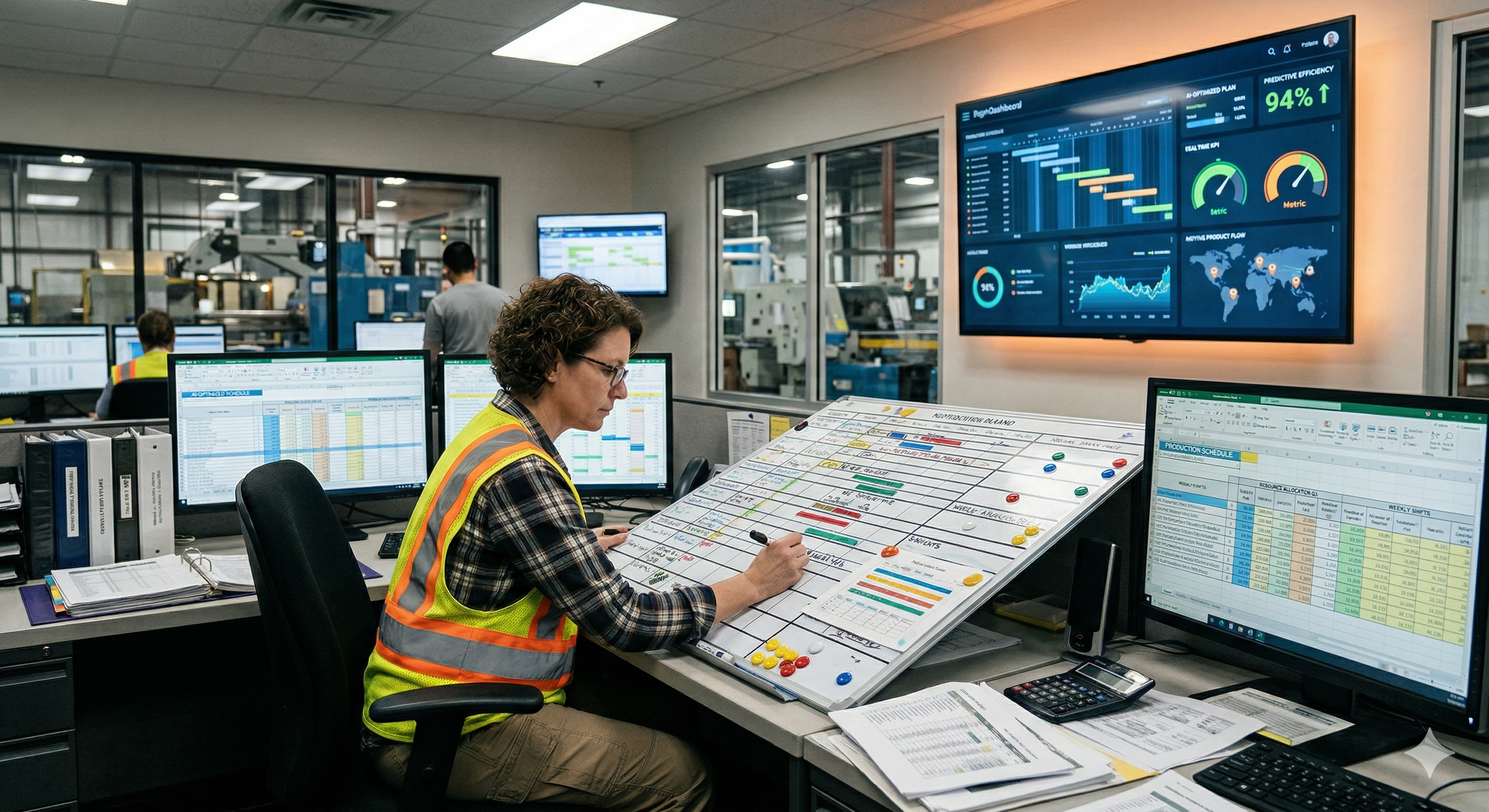
For many organizations, scheduling still lives in spreadsheets.
They’re flexible and familiar but they don’t scale with complexity.
Common challenges include:
Many teams rely on spreadsheets instead of purpose-built production scheduling software, limiting their ability to respond quickly and consistently.
Over time, teams begin working from different versions of reality and the execution gap widens.

Leading manufacturers are shifting from reacting to disruptions toward anticipating them.
Instead of asking, “How do we fix this?” they ask:
As Kevin explained:
“Scheduling strategy should ebb and flow with market conditions and business goals… APS allows teams to simulate scenarios and prioritize what matters most.”
This shift transforms scheduling from an execution task into a decision-making tool.
When organizations align scheduling with real-world constraints, the impact extends beyond operations:
Most importantly, teams spend less time reacting and more time making informed decisions.
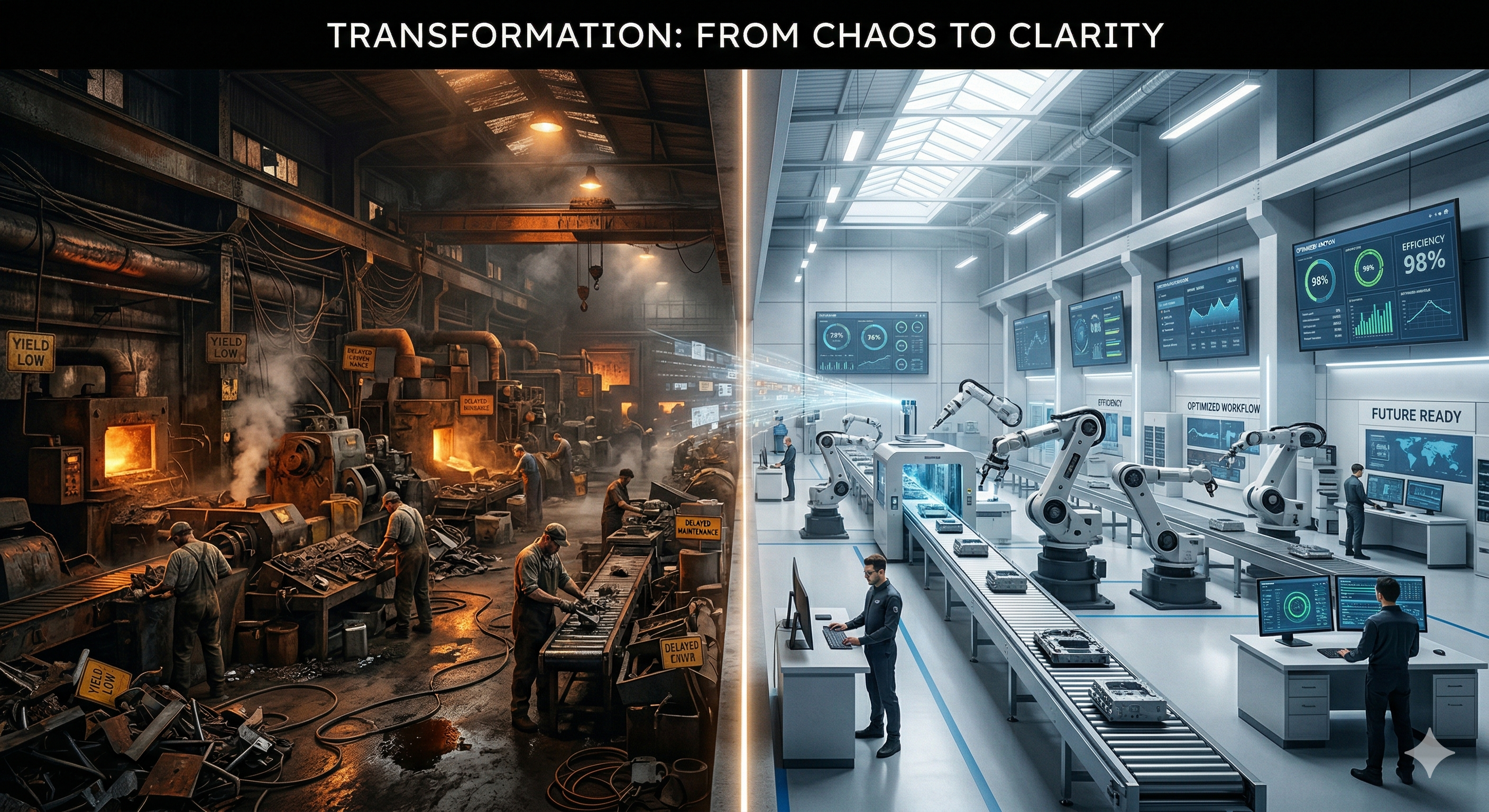
PlanetTogether APS enables manufacturers to bridge the gap between planning and execution by making schedules both realistic and adaptable:
What is the difference between production planning and scheduling?
Planning defines what should be produced at a high level, while scheduling determines the exact sequence and timing based on real-world constraints.
Why do production plans fail on the shop floor?
Because they assume stable conditions, while actual operations face variability in materials, machines, and demand.
Can ERP systems handle production scheduling?
ERP systems manage planning and transactions but typically lack the constraint-based logic needed for detailed, real-time scheduling.
How does APS improve scheduling accuracy?
APS accounts for capacity, constraints, and real-time changes, enabling feasible and optimized schedules.

Optimize pharmaceutical manufacturing with Value Stream Mapping and PlanetTogether integration for operational excellence.
Discover how integrating PlanetTogether with ERP systems leads to sustainable production planning for a greener future.
Boost demand forecasting accuracy in chemical manufacturing with AI and integrations like PlanetTogether, SAP, and Kinaxis for smarter supply chain...