Quick Answer: What Is Capacity Analysis in Operations Management?
Capacity analysis in operations management shows how much work a plant can realistically complete. It accounts for labor, machine time, materials, storage, and schedule limits. Manufacturers use it to find bottlenecks, improve order commitments, and build more accurate capacity plans.
In manufacturing, capacity is finite. Planners need a clear view of what the plant can produce before they commit more work. For additional background, see this ASCM capacity planning reference.

Why Capacity Analysis Matters in Manufacturing
Accurate capacity planning helps manufacturers accept work the plant can actually complete. It connects demand to real limits across machines, labor, storage, and process steps.
As a result, planners can reduce avoidable overload, protect throughput, and set more reliable delivery dates. They can also see when demand is outrunning available capacity before late orders, overtime, and expediting costs increase.
What Limits Available Capacity in a Plant?
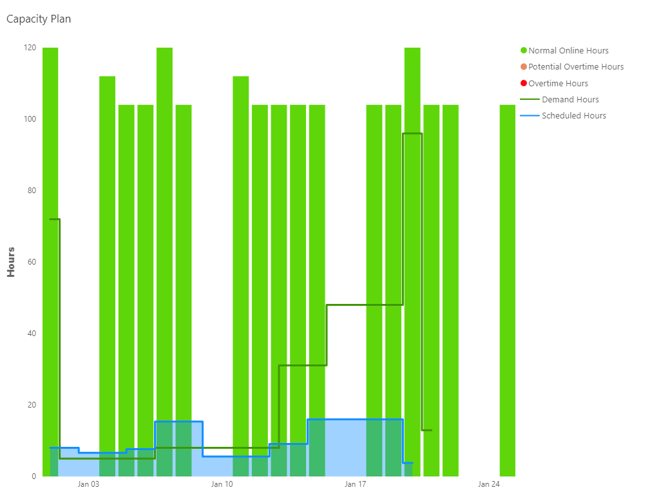
Capacity limits reduce how much a plant can produce in a given period. Common limits include labor availability, machine uptime, storage space, maintenance windows, changeovers, material shortages, quality holds, and customer requirements.
Unexpected disruptions can tighten capacity even more. Labor restrictions, supplier issues, or new operating rules can reduce output quickly. Therefore, plants that understand their real constraints can adjust faster and make better tradeoffs.
Three Capacity Limits That Shape Real Output
Capacity analysis becomes more useful when planners focus on the limits that actually reduce output. In most plants, those limits fall into three practical groups.
Cost Constraints
Cost limits capacity when extra output is possible but too expensive. Overtime, outside labor, added storage, premium freight, or subcontracting may increase output. However, those options can erode margin if they become routine.
Performance Constraints
Performance limits capacity when machines, labor, or processes run below expected output. Downtime, slow changeovers, speed loss, and weak schedule adherence can reduce the volume a line can deliver.
Capability Constraints
Capability limits capacity when the plant lacks the right equipment, labor skill, tooling, or process fit for a required job. This often appears when a bottleneck depends on a specialized machine or a small group of trained operators.
How to Identify Capacity Bottlenecks
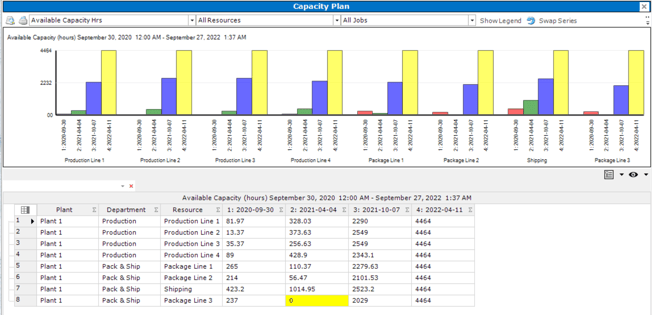
Capacity analysis starts with the manufacturing bottleneck. A bottleneck is the process step that limits total plant output.
Look for overloaded work centers, growing queues, frequent schedule breaks, late jobs, and resources that stay busy while downstream operations wait. When a bottleneck stays overloaded, delays grow, work-in-process builds up, and delivery risk increases.
Therefore, the goal of capacity analysis is not just to describe the problem. It should show where the limit is and what change will improve flow.
How to Increase Effective Capacity
- Perform regular maintenance to improve machine uptime.
- Add low-cost capacity where it makes financial sense.
- Train employees to support constrained operations.
- Reallocate work to protect the bottleneck.
- Improve sequence planning to reduce setup and changeover loss.
How APS Improves Capacity Analysis and Capacity Planning
Capacity modeling works best when planners use real constraints instead of rough estimates. That is where Advanced Planning and Scheduling software for manufacturers helps.
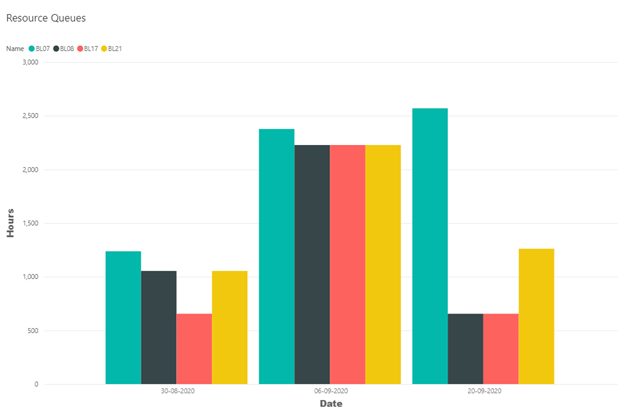
APS uses current plant data to support finite capacity scheduling. It accounts for machine limits, labor availability, changeovers, maintenance windows, and material constraints. As a result, planners can build schedules around real plant limits instead of rough planning assumptions.
PlanetTogether’s software is by far the best and most encompassing planning software package offered today.
ED CZYSZ, PRODUCTION SCHEDULING MANAGER, ILLES SEASONINGS & FLAVORS
Instead of treating capacity as a rough planning number, APS turns it into an operational limit the schedule must respect. In turn, teams can identify overloads faster, protect bottlenecks, and make stronger delivery commitments.
When to Use Capacity Analysis, Capacity Planning, or APS
Use this framework to decide whether your current planning process is enough or whether deeper analysis or APS is needed.
Use your current planning process alone when: demand is stable, bottlenecks are manageable, and schedule changes are infrequent.
Add deeper capacity analysis when: late orders, overtime, long changeovers, or queue growth suggest that demand is outrunning real plant capacity.
Add APS when: planners need schedules that reflect real labor, machine, material, and maintenance constraints instead of spreadsheet-based production scheduling or ERP-connected planning without finite scheduling logic.
How PlanetTogether APS Turns Capacity Analysis Into Action
After planners identify real capacity limits, they need a way to apply those limits inside the schedule. PlanetTogether APS scheduling software helps manufacturers turn capacity analysis into executable production plans.
With PlanetTogether APS, teams can:
- Build schedules that reflect real labor, machine, and material limits.
- Protect bottleneck resources from overload.
- Respond faster when demand, maintenance, or supply conditions change.
- Improve order commitments with more realistic schedule logic.
- Compare scenarios before changing the live plan.
Capacity Planning with APS: Reduce Bottlenecks and Delays
This video shows how capacity planning supports better production decisions. More importantly, it connects capacity analysis to real plant constraints such as machine time, labor limits, maintenance windows, and bottleneck resources.
It also shows how Advanced Planning and Scheduling software helps teams model finite capacity, balance workloads, and respond faster to demand changes. As a result, manufacturers can reduce manual rescheduling, improve schedule accuracy, and make stronger delivery commitments.
See Where Poor Planning Drains Capacity and Profit
When capacity gets tight, small planning gaps become expensive fast. Weak sequencing can waste usable hours, bottlenecks can trigger overtime, and late completions can drive up expediting costs.
Download our Planning Profitability Infographic to see how poor planning reduces effective capacity and hurts margin. It shows how better sequencing, bottleneck protection, and maintenance timing can improve delivery performance and plant efficiency.
What the infographic covers:
- How inefficient sequencing reduces effective capacity.
- Why bottlenecks often create reactive overtime cost.
- How poorly timed maintenance cuts output.
- Why weak planning increases inventory carrying cost.
- How late orders lead to lost sales and expedited shipping cost.
Download the infographic to see where hidden planning losses reduce capacity, raise cost, and weaken delivery performance.

FAQs: Capacity Analysis in Operations Management
What is capacity analysis in operations management?
Capacity analysis measures how much work a plant can realistically complete with its current labor, machines, materials, storage, and time constraints.
What is the difference between capacity analysis and capacity planning?
Capacity analysis identifies current plant limits and bottlenecks. Capacity planning uses that information to decide how the plant should meet future demand.
What causes capacity bottlenecks in manufacturing?
Common bottlenecks include limited machine time, labor shortages, long changeovers, maintenance downtime, material shortages, and specialized process requirements.
Why does finite capacity matter in production planning?
Finite capacity prevents planners from committing work that exceeds real labor, machine, or material availability. This improves schedule accuracy and order commitments.
How does APS help with capacity analysis?
APS helps planners apply capacity data to real schedules. It models constraints, balances workloads, protects bottlenecks, and helps teams respond faster to demand or resource changes.
See PlanetTogether APS in Action
Accurate capacity planning starts with a clear view of real plant constraints. Request a PlanetTogether APS demo to see how your team can model finite capacity, protect bottlenecks, and build more realistic production schedules.