Operations management (OM) is the process manufacturers use to plan, coordinate, and control production work. It turns labor, materials, equipment, and information into finished goods.
It connects planning, scheduling, quality, inventory, production, and delivery. It also supports the broader production of goods and services.
Without effective operations management, departments can work from different priorities. As a result, teams may fight late orders, excess inventory, quality issues, and schedule changes without a shared plan.
Answer Capsule: Effective operations management helps manufacturers improve quality, delivery, cost control, waste reduction, and team coordination. In production environments, those gains depend on realistic schedules, clear constraints, and shared visibility across materials, labor, equipment, and customer demand.
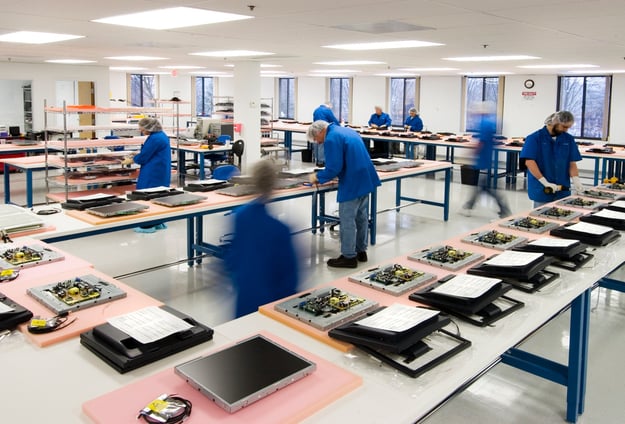
In a production facility, operations management works best when teams can see what needs to run, which resources are constrained, and how changes affect delivery commitments.
Key Benefits of Effective Operations Management
-
Product quality - Operations management helps manufacturers define quality standards, monitor process performance, and find where defects or rework begin. A quality management process supports work instructions, inspections, and corrective actions. As a result, teams can reduce variation and better meet customer requirements.
-
Customer satisfaction - Customers expect reliable quality and realistic delivery dates. Operations management supports those goals by coordinating production, materials, labor, and capacity. When the schedule reflects real constraints, customer service teams can set better expectations and reduce avoidable expediting.
-
Cost and revenue performance - Operations management can support financial performance by improving delivery reliability, throughput, and customer confidence. It can also reduce avoidable cost by exposing process waste, excess inventory, rework, overtime, and poor sequencing. However, these gains depend on disciplined processes and reliable production data.
-
Waste reduction - Waste reduction is a core benefit of effective operations management. Lean manufacturing identifies 7 wastes, including overproduction, waiting, excess inventory, unnecessary motion, and defects. Better planning and scheduling can help reduce waiting time, excess WIP, and reactive firefighting.
-
Collaboration - Operations management gives production, purchasing, customer service, finance, and leadership a shared view of priorities. For example, production needs capacity data, purchasing needs material timing, and customer service needs accurate promise dates. A shared plan helps each team work from the same operational reality.
We now have a consistent tool for our planning and scheduling that is used by most of the departments, from supervisors, production planners, purchasing, IT staff, and management.
BRUCE HAYS, DIRECTOR OF MANUFACTURING, J&J SYNTHES
Operations management can be difficult when teams rely on disconnected spreadsheets, manual schedule changes, or limited visibility into capacity. One practical next step is advanced planning and scheduling software, which helps connect planning decisions to resource capacity, materials, and production priorities.
Decision Framework: What to Improve First in Operations Management
Use this framework to choose the next operations management improvement based on the problem your plant feels most often.
- If quality or rework is the main issue: Start with process stability, quality controls, and clear work instructions. Then protect constrained resources so quality fixes stay in place.
- If on-time delivery is the main issue: Prioritize constraint-based scheduling and faster rescheduling when demand, labor, or supply changes.
- If waste or cost is the main issue: Find the biggest waste drivers first, such as waiting, excess WIP, changeovers, or poor sequencing.
- If teams are misaligned: Create one shared plan across production, materials, maintenance, and customer priorities.
- If volatility is constant: Run what-if scenarios before changing the live schedule.
Advanced Planning and Scheduling (APS) Software
Effective operations management depends on coordinating people, equipment, information, and technology across the organization. Otherwise, teams can work at cross purposes.
APS gives manufacturers a practical way to turn operations strategy into a shared planning and scheduling process. It helps planners account for constraints such as machine capacity, labor, materials, changeovers, and customer priorities.
When product variety, delivery expectations, or cost pressure increase, planners need schedules that can change with the plant. APS can also integrate with ERP/MRP. This helps connect order, inventory, routing, and capacity data in one planning process and can close common gaps in planning and scheduling flexibility, accuracy, and efficiency.
With PlanetTogether APS, manufacturers can:
- Build realistic schedules that balance production efficiency and delivery performance.
- Improve bottleneck visibility and throughput planning.
- Align supply with demand to reduce excess inventory.
- Create shared visibility into resource capacity, constraints, and commitments.
- Run what-if scenarios to support faster decisions when conditions change.
By using operational data from the ERP environment, APS can help manufacturers move from disconnected plans to realistic schedules based on plant constraints.
Advanced Planning & Scheduling (APS): What It Is and Why It Matters
Advanced Planning and Scheduling (APS) helps manufacturers plan and sequence production around real constraints. These constraints can include labor, machine capacity, changeovers, and material availability.
This video explains how APS differs from basic ERP/MRP planning. It also shows why finite capacity scheduling helps planners make better decisions when competing orders and bottlenecks collide.
For operations management teams, APS provides a clearer way to coordinate people, equipment, materials, and customer priorities when demand shifts or production disruptions occur.
Download the Infographic: Where Manufacturers Lose Money Without Better Planning
Even strong operations management can break down when planning relies on manual handoffs, disconnected spreadsheets, or reactive expediting. The result is often missed delivery dates, wasted capacity, rising overtime, and excess inventory.
Our infographic, “The Money Is in the Planning,” shows common ways manual planning can undermine manufacturing performance. It is a quick resource for operations leaders who want to connect planning friction to overtime, wasted capacity, inventory, and delivery performance.
If your team is working toward more reliable schedules and better coordination across production, maintenance, and customer delivery priorities, this infographic can help connect daily planning problems to business impact.
In the infographic, you’ll see how poor planning can drive:
- Lost sales from late deliveries or long lead times
- Capacity loss from inefficient sequencing, changeovers, and cleanouts
- Higher overtime costs when bottlenecks force reactive catch-up
- Reduced output from unplanned or interruptive maintenance
- Escalating inventory carrying costs from building too early or buying too soon
Operations Management FAQs
What is operations management in manufacturing?
Operations management is how a manufacturer designs, runs, and improves the processes that turn labor, materials, equipment, and data into finished goods. It includes planning, scheduling, quality, inventory coordination, and continuous improvement.
What are the most important operations management KPIs?
Important operations management KPIs include on-time delivery, throughput, cycle time, lead time, schedule adherence, OEE or utilization, scrap rate, rework rate, WIP, and inventory turns.
How does effective operations management reduce waste?
Effective operations management reduces waste by stabilizing processes, sequencing work to reduce waiting and changeovers, and synchronizing materials with real capacity.
When does ERP/MRP fall short for production scheduling?
ERP/MRP can fall short when production scheduling needs finite capacity, setup logic, downtime, labor skills, material readiness, and fast rescheduling when priorities change.
When should a manufacturer consider APS?
A manufacturer should consider APS when schedules change often, planners spend too much time reshuffling work, bottlenecks cause chronic lateness, or spreadsheet scheduling no longer reflects plant constraints.
See How APS Supports Operations Management
Ready to turn operations priorities into a realistic, constraint-based schedule? See how PlanetTogether APS helps manufacturers model capacity, materials, labor, and production priorities in one schedule.
Request a PlanetTogether APS demo.