As technology has continued to disrupt logistics and the supply chain process through changing it all together from its core, we have seen the industry become much faster, refined, and complex. Technology being integrated into the mix of supply chains has drastically changed the logistics and supply chain process - ultimately bringing things to the next level in terms of efficiency. As efficiency and speed find themselves to be determining factors, logistics adopted a new approach to deal with rising demand and process complexity. A viable solution that effectively manages the flow of things to ensure that the correct product reaches the correct customer within the specified period has made its way to the market - logistics management software.
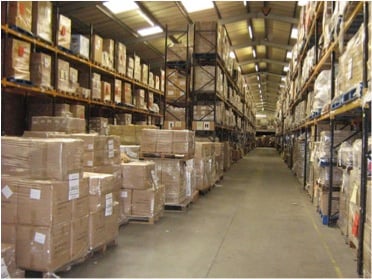
Utilizing logistics management software is a must when attempting to increase visibility across your entire supply chain. Organizations that invest in logistics management software have found themselves too able to produce good end results with noticeable improvements in process, operations, and delivery.
Overview of Logistics Software
To adequately understand the software, it is essential to understand what should be understood pertaining to logistics management software. Logistics pertains to the flow of things from a point of origin to the point of consumption, usually consumers or businesses. The selection pertaining to vendors, transportation means, and routes constitute an integral part of logistical operations. For a concise definition, see CSCMP logistics management definition.
Logistics management is a portion of the supply chain that utilizes planning and implementation to store and deliver goods to the consumer. It coordinates several key activities of the supply chain that ranges from development of products to overall commercialization. A logistics management system may include inbound and outbound transportation management, fleet management, warehouse management, and inventory control.
Challenges in Logistics Management
Logistics is prone to various issues that tend to occur due to human error. Weak decisions will result in delays in the transport of delivery of goods leading to dissatisfaction among customers. Another challenge that logistics usually face is in the transport of goods. Goods may be damaged or faulty if not handled accordingly while in transit.
Customer demand is also another component to consider within logistics management and is an overgrowing concern. With more competitors coming into play, it is important to ensure that your customers find themselves loyal to you. This is conducted through successful order fulfillment and overall quality of service. Measurement of this is key for your facility and operation.
The last challenge pertaining to logistics management includes risk management. Effective risk management and direction of the relation between the suppliers and partners is also vital. A reliable solution that covers these challenges is an absolute necessity for logistics operations. Logistics management software can streamline information and guide providers or business deals in the best possible direction.
Advantages of Having Logistics Management Software
In this area pertaining to logistics, handing over the process to logistics management software has its own advantages. The advantages pertain to logistics management software pertain to the following:
- Refining Transportation - Transportation being an integral portion of the operation, this obviously will fall in one of the most important aspects to consider. Transportation includes fuel, energy, labor, shipping fees, and tolls - overall, very costly. Utilizing logistics software can aid with the management of various transportation means and leverage data to automate the process. This will enable easy analysis, which a company can utilize to make relevant decisions pertaining to efficiency maximization. For solution context, review Transportation Management System (TMS) fundamentals.
- Faster Delivery - Logistics also pertains to a linear flow of goods and services, which could include potential issues down the line that ultimately affect delivery and cause delays. Through incorporation of logistics software, a benefit that businesses could derive is faster delivery of products. Logistic software can aid with the improvement of speed in delivery through interfering in the production cycle and selecting the best possible shipping service.
- Minimization of Human Error - Another notable advantage pertaining to logistics management software includes the reduction of human error. Analysis of transportation data results in quantities of data that is complex and challenging when conducted manually. With the utilization of logistics software, it is much faster and processes data without any errors, which pushes forward operations significantly.
- Cost Reduction - Cost reduction is a huge concern amongst many supply chain managers. Saving money leads to more profit down the road, which is why it is very important to locate any ways to cut costs. Logistics software can easily locate areas that are costly and find ways to reduce these costs through effectively planning the improvement of shipments.
A software that can aid with the production process and improve the accuracy of production pertains to PlanetTogether’s Advanced Planning and Scheduling Software (APS). PlanetTogether’s Advanced Planning and Scheduling (APS) Software can easily be integrated with various other softwares such as ERP, MRP, and MPS and provide thorough insight and visibility into your overall supply chain. With APS, you can find yourself getting ahead of the competition, cutting costs, and ultimately increasing profitability within your overall operation.
Advanced Planning and Scheduling Software
Advanced Planning and Scheduling (APS) software has become a must for modern-day manufacturing operations due to customer demand for increased product mix and fast delivery combined with downward cost pressures. APS can be quickly integrated with a ERP/MRP software to fill gaps where these systems lack planning and scheduling flexibility and accuracy. Advanced Planning and Scheduling (APS) helps planners save time while providing greater agility in updating ever-changing priorities, production schedules, and inventory plans.
Implementation of Advanced Planning and Scheduling (APS) software will take your manufacturing operations to the next level of production efficiency, taking advantage of the operational data you already have in your ERP.
Video: Using What-If Scenarios in PlanetTogether APS to Optimize Logistics Plans
In this video, you’ll see how PlanetTogether Advanced Planning and Scheduling (APS) uses what-if scenarios to improve logistics management. Learn how planners can model different transportation, warehouse, and production plans—then compare results on cost, delivery speed, and resource utilization before committing to a final logistics plan.
Key takeaways from this video:
- How what-if scenarios in APS improve logistics planning
- How to compare transportation, warehouse, and production options
- How logistics management software plus APS reduces cost and human error
- How scenario analysis supports faster, more reliable deliveries
- How APS uses ERP and logistics data to build optimized, realistic plans
Turn Your Logistics Software into a Planning Profit Engine
Investing in logistics management software is a powerful step toward better visibility, faster delivery, and lower transportation costs. But the real gains happen when that software feeds into strong planning and scheduling—where you decide which orders to run, when to ship, which routes to use, and how to balance cost against service. That’s where PlanetTogether APS plus your logistics tools can transform performance.
Download our one-page “The Money Is in the Planning” infographic to see how better planning and scheduling can help you:
- Refine transportation decisions to cut fuel, labor, and freight cost
- Align production, inventory, and logistics so the right product reaches the right customer on time
- Reduce manual errors and last-minute scrambling by letting systems process complex logistics data
- Turn ERP and logistics management software into a coordinated, profit-focused plan instead of disconnected tools
Use it with your logistics and operations teams as a quick checklist to identify where APS-driven planning can unlock the most value from the logistics software you already have.
