APS: 5 Essential Concepts to Transform Production Scheduling
Advanced planning and scheduling concepts are important to understand before implementing the software. Advanced planning and scheduling concepts are...
Concepts, applications, and insights to help manufacturers plan better, schedule smarter, and operate more efficiently.
This page serves as a central knowledge hub for Advanced Planning and Scheduling (APS), connecting key concepts, systems, and real-world applications used in modern manufacturing.
Manufacturers face increasing pressure to deliver faster, operate with fewer resources, and respond to supply chain disruptions. Traditional planning tools and spreadsheets cannot keep pace with modern production complexity.
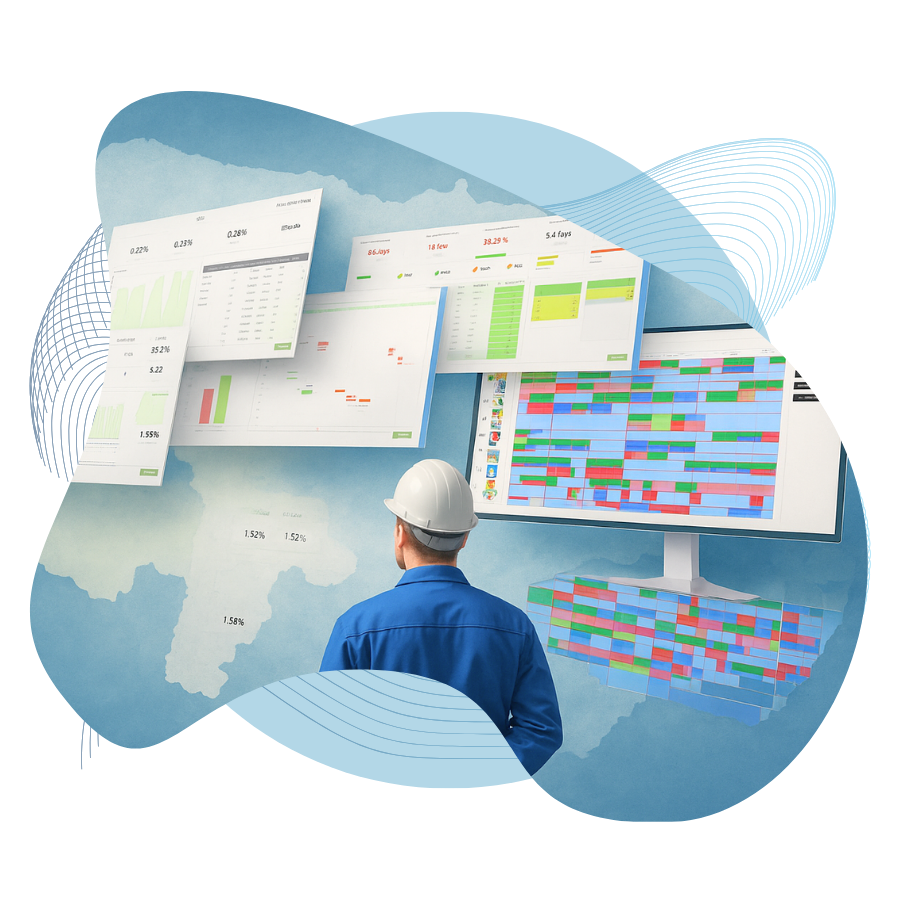
Advanced Planning and Scheduling (APS) provides the visibility and intelligence needed to coordinate production, materials, labor, and machines across manufacturing operations. These capabilities include finite capacity scheduling, capacity planning, and production scheduling systems, enabling organizations to create realistic, executable production plans.
APS software helps manufacturers improve production scheduling, optimize capacity planning, reduce delays, and increase overall operational efficiency.
If your organization is evaluating APS solutions or looking to improve scheduling performance, this resource hub provides a structured starting point for understanding how advanced scheduling drives operational success.


Advanced Planning and Scheduling (APS) is manufacturing software that creates optimized production schedules by accounting for real-world constraints such as machine capacity, labor availability, material supply, and order priorities.
Unlike traditional ERP planning tools, APS systems evaluate these constraints simultaneously to generate feasible schedules that improve production efficiency and delivery reliability.
APS platforms allow planners to:
By aligning production planning with real operational constraints, APS systems enable manufacturers to improve service levels while maintaining efficient use of resources.
Manufacturing environments today face more variability than ever before.
Common challenges include:
Frequent demand changes and expedited orders
Limited machine or labor capacity
Material shortages or supply chain disruptions
Complex product mix and production routing
Without advanced scheduling tools, planners often rely on spreadsheets or ERP planning modules that cannot fully account for these constraints.
APS systems provide a structured approach to managing this complexity by synchronizing production plans with real operational conditions.
This allows manufacturers to:
Improve on-time delivery performance
Reduce lead times and production delays
Increase throughput without additional equipment
Respond faster to supply chain changed
PlanetTogether has focused exclusively on solving these manufacturing planning and scheduling challenges since its founding, enabling manufacturers to coordinate production across complex operations worldwide.
Ensures production plans reflect real-world constraints such as machines, labor, and materials. Learn more about finite capacity scheduling.
Translate production plans into executable schedules across manufacturing operations.
Highlights the differences between transactional systems and advanced scheduling tools.
Explains how material planning integrates with capacity-based scheduling.
Manufacturers typically evaluate APS implementations based on improvements in operational performance metrics.
Common APS performance indicators include:
PlanetTogether offers advanced scheduling software for complex manufacturing environments.
The platform enables organizations to:
These capabilities help planners quickly adapt to disruptions while keeping production efficient. PlanetTogether APS offers features like constraint management, bottleneck detection, scenario comparison, and multi-factor optimization.

Advanced scheduling technology is widely used across industries with complex production environments. Examples include:
These industries rely on APS to manage complex production flows, maintain compliance requirements, and optimize resource utilization across multiple production lines or facilities.
.png?width=800&height=450&name=planettogether%20aps%20(2).png)
This knowledge hub organizes the core concepts, systems, and methodologies behind Advanced Planning and Scheduling (APS). Use the sections below to explore how manufacturers improve production scheduling, optimize capacity, and coordinate operations across complex environments.
Each of these topics provides deeper insight into how manufacturers optimize production, improve delivery performance, and respond to operational complexity using advanced planning and scheduling.
Understanding these foundational concepts is essential for building effective production schedules and evaluating advanced planning systems.
Modern manufacturing relies on integrated systems to balance demand, resources, and production execution.
APS does not operate in isolation. It connects with broader manufacturing strategies that improve efficiency and responsiveness.
Advanced Planning and Scheduling works alongside other enterprise systems to create a complete production planning strategy.
Advanced planning and scheduling concepts are important to understand before implementing the software. Advanced planning and scheduling concepts are...
Production planning software can be a great way to reduce costs and increase efficiency with a relatively low level of initial investment.
Finite capacity scheduling software has become a choice for operations that want to optimize production. Finite capacity scheduling software is key.
Discover the game-changing Superchain approach to supply chain management, where seamless communication among manufacturing plants operating under...
Using overall equipment effectiveness (OEE) as a financial key performance indicator (KPI) is a must when attempting to boost performance.
Understanding how an Enterprise Resource Planning (ERP) System works is important for your manufacturing operation in terms of optimal efficiency.
Maximize eco-efficiency in industrial manufacturing with integrated planning solutions. Discover the power of PlanetTogether in synergy with ERP,...
There are various advantages and disadvantages associated with ERP software that are important when considering to purchase the software.
Production planners and schedulers should use what-if scenarios to evaluate and compare various production schedules and increase production...
The five strategies for enhanced supply chain management are a must to understand in order to boost the production efficiency within an operation.
Advanced planning and scheduling software (APS) is an extremely beneficial software that enables visual production scheduling.
Explore the transformative power of Sustainable Scheduling with PlanetTogether, integrating seamlessly with SAP, Oracle, Microsoft, Kinaxis, Aveva,...
Advanced Planning and Scheduling, APS, is a type of manufacturing software used to create optimized production schedules. APS systems evaluate real-world constraints such as machine capacity, labor availability, materials, and order priorities to generate feasible production plans. Unlike traditional planning tools, APS continuously adjusts schedules to maintain efficiency and improve delivery performance.
Manufacturers use APS software to manage complex production environments where multiple constraints affect scheduling decisions. APS improves visibility across production resources, identifies bottlenecks, and helps planners evaluate different scheduling scenarios. These capabilities allow organizations to improve on-time delivery, reduce lead times, and increase production efficiency.
APS improves production scheduling by analyzing multiple factors simultaneously, including machine capacity, labor availability, material supply, and order priorities. Optimization algorithms generate schedules that balance resource utilization while meeting delivery commitments. This enables manufacturers to respond more effectively to disruptions and changing demand.
Organizations typically measure APS return on investment using operational performance metrics. These may include on-time delivery rates, production throughput, capacity utilization, inventory levels, and production lead times. Improvements in these metrics indicate that scheduling decisions are better aligned with real production constraints.
APS technology is widely used in manufacturing industries with complex production environments. Common industries include food and beverage manufacturing, chemicals production, high-tech electronics, packaging and printing, life sciences and pharmaceuticals, and aerospace and defense. These sectors rely on APS to coordinate multiple resources and maintain efficient production operations.
MRP systems calculate material requirements based on production plans and demand forecasts. APS extends this functionality by coordinating those material plans with production capacity and scheduling constraints. Together, MRP and APS create a more complete manufacturing planning environment that balances material availability with production resources.
Stay ahead in the dynamic world of manufacturing with our blog, where PlanetTogether explores the latest industry trends, challenges, and innovations.
Whether you're seeking strategic guidance or practical tips, this blog is your go-to resource for navigating the future of manufacturing.