With any supply chain, there is always room for improvement. Whether it be bottleneck elimination, cost management, or a new system integration, project managers are attempting to locate various ways in which they can optimize their supply chain.  Supply chain optimization methods will permit your manufacturing operation to come closer to overall production and factory efficiency, leading to reductions within time and cost. Furthermore, here are five ways you are able to optimize your supply chain.
Inventory Control
Being fully aware of your inventory not only reduces cost, but it will enhance delivery time as well. Inventory accuracy is a must for any manufacturing operation that wants to expand their consumer base and target market. Delivery times are important to all consumers, and if the materials or product do not show up on time, then the entire supply chain can fall out of whack, leading to lost time and revenue.
Supplier Inventory Management
Establishing a favorable relationship with your supplier will enable open communication. Through open communication, you can share information about customer demand and inventory, which may optimize your demand planning. As both you and the supplier have the same goals (delivery time accuracy), being open and sharing information with your supplier will permit a steady flow within your supply chain.
Demand Planning
Demand planning is vital within supply chain. To do this, you will need accurate customer forecasting and orders to develop a successful demand plan. This will lead to cost and inventory reduction within your supply chain, ultimately leading to an increase in revenue. In modern manufacturing, demand planning has become much simpler with implementation of integrated systems.
System Integration
Modern Manufacturers can not reach full potential without integrating an accurate and efficient system. Whether it is an enterprise resource planning system (ERP) or installing advanced planning and scheduling software (APS), gradually witness the improvements in production through systemic accountability and optimization. 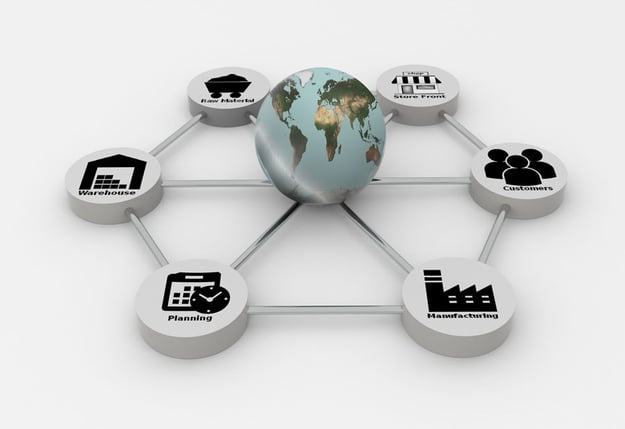 These systems can account for various areas of the supply chain such as demand planning, capacity planning, inventory management, and production control.
Advanced Planning and Scheduling (APS) Software in Supply Chain Optimization
Advanced planning and scheduling software (APS) offers as an extension to your ERP system. Through various benefits and capabilities such as capacity planning, “what-if” scenarios, and demand planning, quickly optimize production and reduce cost within your supply chain.
Some of the benefits of advanced planning and scheduling include the following:
- Improved Delivery Performance
- Boosts in Profits
- Reduction in Inventory and Labor Cost
- Six month ROI
With the perks of simple integration, an advanced planning and scheduling (APS) system will turn your manufacturing operation into a profit center and put you a step above competitors. APS is a true part of SCM and SCP is so many ways.
Video: Introduction to APS for Supply Chain Optimization
In this video, you’ll get a clear introduction to Advanced Planning and Scheduling (APS) and how it supports supply chain optimization. See how APS extends your ERP/MRP and supply chain management software by adding capacity planning, what-if scenarios, and detailed production scheduling so you can reduce cost without sacrificing delivery performance.
You’ll learn how APS helps manufacturers:
– Improve inventory control by aligning production with accurate demand planning
– Coordinate supplier inventory management with real-time production needs
– Balance demand and capacity to avoid bottlenecks, overtime, and expediting
– Integrate system data into one planning environment that boosts delivery performance, increases profit, and reduces inventory and labor cost—often achieving ROI in six months or less
This video is ideal for supply chain managers, planners, and operations leaders who want to understand what APS is and how it fits into a modern supply chain optimization toolkit alongside demand planning, inventory control, and system integration.
Turn Supply Chain Optimization Ideas into a Better Plan
Inventory control, stronger supplier collaboration, better demand planning, and system integration are all powerful ways to optimize your supply chain—but the real gains show up when they are reflected in a smarter planning and scheduling process. Without a central planning engine, it is hard to turn improved data and tools into lower cost, better delivery performance, and higher profit.
Download our one-page “The Money Is in the Planning” infographic to see how combining these optimization methods with Advanced Planning and Scheduling (APS) can help you:
- Translate inventory control and demand planning into concrete production and purchasing decisions
- Use supplier inventory information to stabilize flow and reduce stockouts and rush orders
- Integrate ERP, MRP, and APS so your teams plan from the same real-time data instead of disconnected spreadsheets
- Improve delivery performance while reducing inventory and labor cost, turning your supply chain into a true competitive advantage
Share the infographic with your supply chain, planning, and operations teams as a quick visual guide to where better planning and scheduling will have the biggest impact on cost and service.
