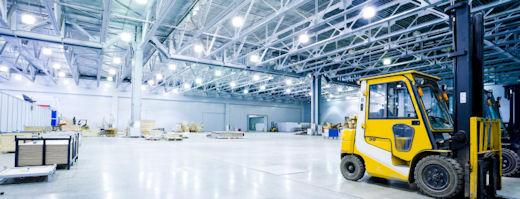
Predicting the future of production planning can be difficult; past predictions have included everything from energy-matter converters to a prediction that centralized manufacturing would end by the late 20th century. While absurd theories abound, it’s reasonable to say that the next several years will bring an increased focus on technology, personalization, and advanced planning techniques to the manufacturing industry.
No one disputes that technology will play a huge role in the factory of the future, but there is a lot of controversy over how technology will shape manufacturing facilities. One of the most obvious ways that things will change is through an increased focus on automation. Already, many facilities are upgrading their production lines with equipment that can produce with minimum employee involvement. While this trend began in the 1980s with the auto industry, only recently has the technology become versatile enough that it can be used by just about any factory. Programmable machines can be set up within minutes to produce a wide variety of products, making them excellent choices for domestic manufacturers that want to keep labor costs low but quality high. As this technology becomes cheaper and more accessible, factories will rely on these combinations of robots and computer-aided machines to produce diverse goods with high efficiency.
Instead of manually determining plans, software will be able to instantly insert orders into the optimal production schedule, then transmit that schedule directly to the machines on the factory floor. Productions lines will change over to produce different products without the interference of human personnel. It will also be able to automate shipping and sorting functions.
This ability to change over production quickly will also mean that many more products will be able to be customized to meet individual customer demand. For example, instead of choosing among several pre-selected paint colors, an auto buyer would have the ability to create their new car’s unique shade. Software will be able to take that order and directly adjust the sprayer machine on the factory floor to match the customer’s request. The finished product would then be automatically shipped to the dealership. Other facilities could allow customers to adjust everything from the height of a desk to the dimensions of a television screen.
Of course, this will require a sophisticated software system that can not only control the facility equipment but also interface with other systems that control ordering and shipping. Not only will this software need to be able to precisely control the factory floor, but it will also be responsible for optimizing the production of the manufacturing facility. With so much automation, it will no longer be necessary to track huge numbers of employees, but scheduling maintenance and constraints will become critically important for a company to control costs and stay competitive. The fact that so many things are automated will make the smallest differences in manufacturing process and have a huge impact on a company’s ability to offer their customers the best price. Factories that can shave even a fraction of a percentage off their product cost will gain a huge advantage in the industry. Companies that have clung to the older, manual ways of production management will be at a huge disadvantage.
What Your ERP Won’t Tell You About the Future of Production Planning (But Should!)
Your ERP is essential—but it can’t see the whole future of production planning. In this video, we explain what your ERP won’t tell you about capacity constraints, optimized scheduling, and real-time decision-making on the shop floor. You’ll see how Advanced Planning and Scheduling (APS) software works alongside ERP to support the factory of the future described in this article: highly automated, fast to change over, and able to handle mass customization without losing efficiency.
Your ERP Is the Backbone—APS Makes It Future-Ready
In this article, you’ve seen where production planning and control are headed: more automation, faster changeovers, and highly customized products driven by sophisticated software instead of manual scheduling. Plants that can quickly adjust schedules, manage constraints, and keep costs low will win—while those clinging to older, manual ways of production management will be left behind.
ERP is an essential foundation, but it was never designed to do everything. It handles transactions and reporting very well—but not detailed capacity planning, constraint-based scheduling, or rapid “what-if” analysis across the factory.
Our white paper, “Why ERP Alone Is Not the Answer,” explains exactly where ERP stops and where Advanced Planning and Scheduling (APS) needs to take over. It shows how adding APS on top of ERP gives you the kind of agile, optimized planning environment that the future of production demands.
In this guide, you’ll learn how to:
- Move beyond tribal knowledge and simple dispatch lists to data-driven capacity decisions
- Quote and meet realistic delivery dates instead of padding lead times or expediting at the last minute
- Build optimized production schedules that consider real constraints—machines, labor, changeovers, and maintenance
- Minimize labor and inventory costs while keeping throughput high and customers happy
- Use ERP + APS together as the core of a more automated, future-ready production planning and control system
If you’re serious about preparing your factory for the next era of production planning, this white paper is your next step.
