Industrial Manufacturing
Sales and Operations Planning in Manufacturing
Learn how S&OP aligns demand, capacity, inventory, and production schedules so manufacturers can make better planning decisions.
Learn how demand-driven manufacturing helps plants align production with real demand, reduce inventory risk, and improve schedules with APS.
Demand-driven manufacturing aligns production, inventory, and scheduling decisions with real customer demand instead of relying on static forecasts. For manufacturers, the goal is to respond faster to demand changes while protecting labor, materials, machines, and bottlenecks. APS software helps turn demand signals into feasible production schedules the plant can execute.
In practice, demand-driven manufacturing helps plants respond faster when demand shifts. As a result, planners can reduce excess inventory, protect constrained resources, and make schedules more realistic.
Forecasts still matter, but they are not enough when orders, materials, or priorities change faster than the schedule can respond. Demand-driven manufacturing helps plants respond to real customer demand with less delay and less inventory risk. In industrial manufacturing, that means better use of constrained labor, machines, and materials.
When demand shifts quickly, forecast-only planning creates late orders, excess stock, and unstable schedules. That is why integrating PlanetTogether with ERP, SCM, and MES systems matters. It helps planners turn demand changes into better production decisions.
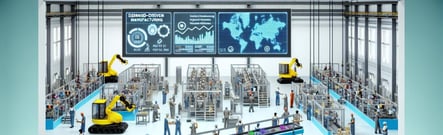
Demand-driven manufacturing uses real demand signals to guide production decisions. Instead of relying mainly on static forecasts, manufacturers respond to live orders, sales patterns, and supply changes.
For example, a rush order should not automatically override every job. Planners still need to check material readiness, labor, machine capacity, changeovers, and bottleneck impact.
As a result, planners can adjust production scheduling, inventory decisions, and resource allocation with better timing. In a plant, that helps teams reduce avoidable inventory, protect constrained resources, and respond faster to market changes.
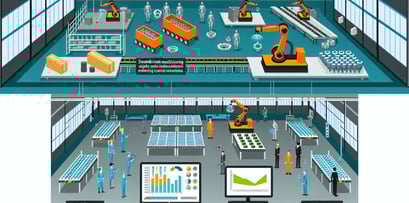
Customer-centricity means production should reflect real customer demand, not just forecast averages. When order mix changes, teams need to adjust sequence, materials, and capacity quickly.
As a result, planners can protect service levels without building unnecessary inventory.
Dynamic scheduling allows manufacturers to adjust schedules when demand, labor, materials, or machine availability changes. That matters because fixed schedules break down when supply or priorities shift.
Therefore, demand-driven plants need schedules that can be updated quickly without losing feasibility.
Lean inventory and JIT principles keep materials closer to real need. Instead of carrying excess stock, manufacturers use lean methods such as Just-in-Time production to reduce waste and free working capital.
However, lean inventory only works when planners can see whether materials will arrive in time for a feasible schedule.
A collaborative supply chain gives planners better visibility across suppliers, distributors, and internal operations. When demand changes, that visibility helps teams react earlier.
In turn, manufacturers can reduce disruption risk and improve schedule stability.
Continuous improvement keeps demand-driven manufacturing from becoming a one-time project. Teams review smart manufacturing performance metrics and correct planning problems before they spread.
As a result, the plant improves schedule quality, responsiveness, and resource use over time.

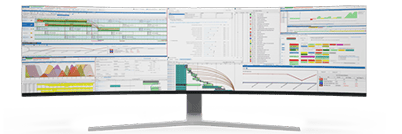
Demand-driven manufacturing only works when planning systems share the same operating picture. APS needs current demand, material, inventory, labor, and execution data to build schedules that reflect real plant conditions.
That is why connected systems matter. When PlanetTogether uses ERP, SCM, and MES data, planners can move demand changes into scheduling decisions faster and with less manual work.
Planners need one view of demand, materials, inventory, and production status. When those signals stay disconnected, the plant reacts too late and schedules lose accuracy.
As a result, connected planning helps teams make faster decisions with less rework.
Demand-driven manufacturing depends on fast schedule changes. When customer demand, material timing, or labor availability changes, planners need to adjust without rebuilding the whole plan.
Therefore, APS helps teams respond faster while keeping schedules feasible.
Demand signals alone do not create good schedules. Planners still need to account for bottlenecks, finite labor, machine availability, material constraints, and changeovers.
In turn, APS helps manufacturers turn demand changes into production decisions the plant can actually execute.
Many plants still lose time when demand changes move through spreadsheet-based production scheduling, emails, and disconnected systems. That slows response time and increases planning risk.
By contrast, connected APS workflows reduce manual effort and support more stable schedule execution.
The main benefit is faster, more reliable replanning when demand, materials, labor, or capacity changes.
Planning and scheduling move faster when execution data, material status, and demand signals stay aligned. That reduces manual handoffs and shortens replanning time.
As a result, teams can respond faster when demand changes.
Better visibility helps planners see production status, inventory position, and resource loading sooner. That gives teams more time to correct problems before delays spread across the plant.
In turn, schedule quality improves.
Sales, supply chain, production, and operations work better when they use the same planning picture. That reduces confusion and limits time spent reconciling conflicting data.
Therefore, teams can act faster and with fewer planning errors.
Plants need to respond quickly when demand shifts, materials arrive late, or schedules change. A connected planning process makes that easier.
As a result, teams can adjust without rebuilding the plan from scratch.
Constrained labor, machines, and materials need deliberate scheduling. When planners can see those limits clearly, they can protect throughput and reduce idle time.
In turn, the plant uses capacity more effectively.
Use forecast-led planning alone when demand is stable, supply is predictable, and schedule changes are limited.
Add demand-driven methods when customer demand changes frequently, inventory swings are costly, or supply disruptions force frequent replanning.
Add APS when demand signals must translate into real schedules that reflect labor, machines, materials, bottlenecks, changeovers, and ERP/MES data.
Shifting from forecast-driven to demand-driven manufacturing is a major step. However, results still depend on how well the plant plans around real constraints.
Even with integrated ERP, SCM, and MES, manufacturers can still lose money to late orders, excess inventory, overloaded bottlenecks, and expediting when scheduling stays manual or spreadsheet-based.
Download “The Money Is in the Planning” infographic to see where planning and scheduling still leak profit. Then use it as a quick review tool with your leadership team.

Demand-driven manufacturing uses real customer demand, material status, and operational constraints to guide production decisions instead of relying only on long-range forecasts.
Forecast-based planning starts with projected demand. Demand-driven manufacturing responds more directly to real orders, demand shifts, and supply conditions as they change.
APS helps manufacturers turn demand signals into feasible schedules that reflect labor, machines, materials, bottlenecks, and changeovers.
They provide critical data, but they do not replace constraint-based scheduling. Demand-driven manufacturing works better when APS connects planning data to executable schedules.
The biggest risks are reacting to demand without checking capacity, relying on weak integration data, and keeping scheduling in spreadsheets instead of a system built for constraints.
Ready to turn demand signals into feasible production schedules? Request an APS demo to see how PlanetTogether APS helps your team align demand, materials, labor, and finite capacity in one planning process.
Learn how S&OP aligns demand, capacity, inventory, and production schedules so manufacturers can make better planning decisions.
Learn how planners assess schedule risks from demand shifts, material delays, machine downtime, labor limits, and supplier issues.
Learn how AI supports JIT inventory management with better demand forecasting, inventory decisions, and APS-connected production planning.