Advanced Planning & Scheduling (APS) by Industry

Tailored Scheduling Solutions, Use Cases, and Strategic Impact for Diverse Manufacturing Sectors

Advanced Planning and Scheduling (APS) is not a one-size-fits-all solution. While the core goal of optimizing production remains the same, the specific constraints, regulations, and operational realities vary wildly from one manufacturing sector to the next.

This page serves as a central knowledge hub for Advanced Planning and Scheduling by Industry, connecting key sector-specific concepts, use cases, and real-world applications utilized in modern manufacturing.

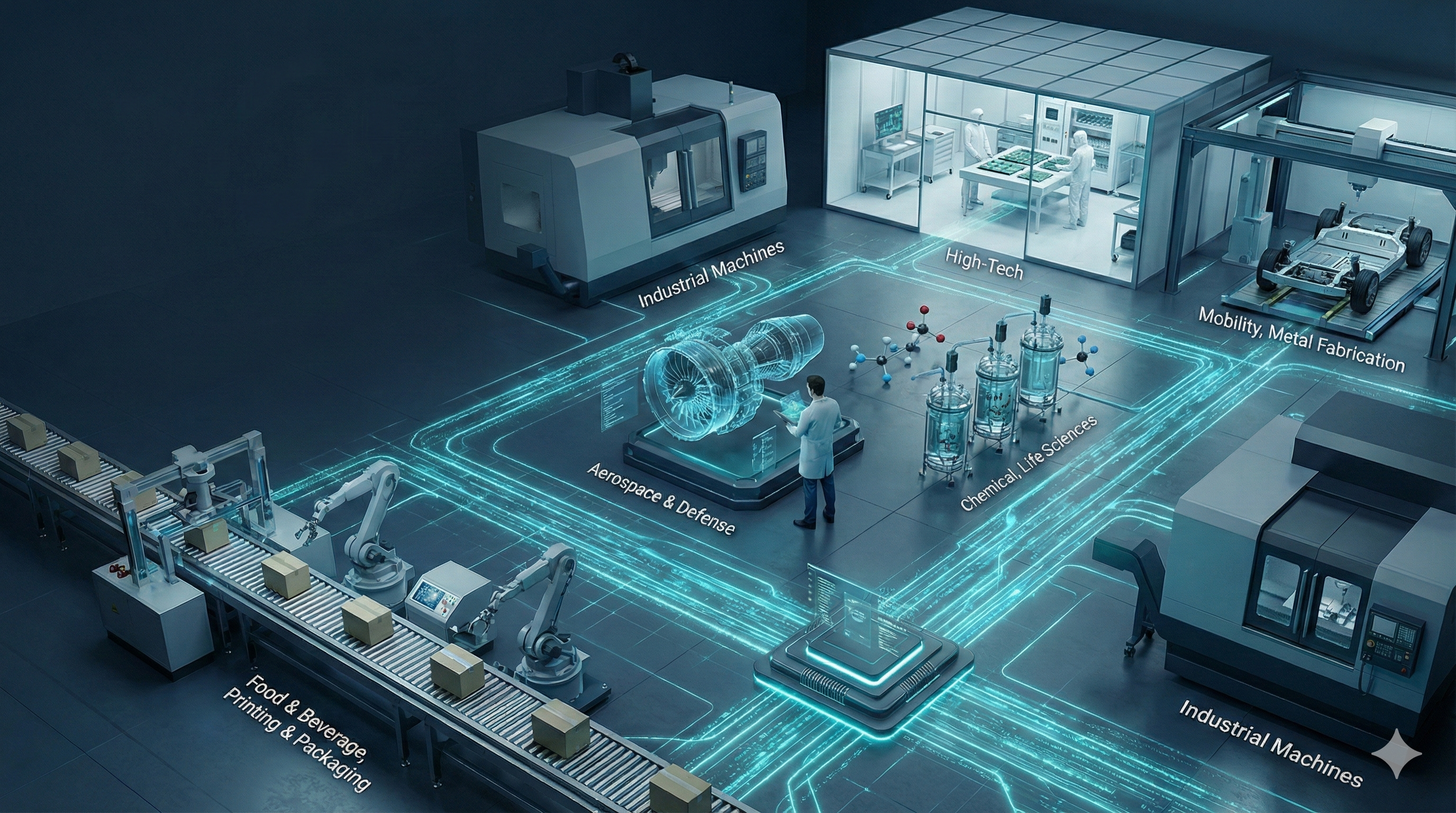
Manufacturers across different verticals face unique pressures—from managing strict shelf-life requirements in Food & Beverage to coordinating complex, multi-level BOMs in Aerospace and Defense. Traditional, generalized planning tools often fail to capture these distinct, industry-specific constraints.

Industry-tailored Advanced Planning and Scheduling (APS) provides the specialized visibility and intelligence needed to coordinate production, materials, labor, and machines according to your specific sector's rules. These capabilities include sequence optimization, shelf-life management, cleanroom capacity planning, and co-product/by-product scheduling, enabling organizations to create highly accurate, executable production plans.

If your organization is evaluating APS solutions tailored to your specific manufacturing vertical, this resource hub provides a structured starting point for understanding how specialized scheduling drives operational success in your field.

Explore the core APS industry pillars below to learn how modern manufacturers in your sector improve scheduling performance and efficiency.
 

APS Scheduling by Industry Blog Listing Page Header Background

 Why Industry-Specific Scheduling Matters  


Manufacturing environments today face complex, sector-specific variability.

Common vertical-specific challenges include:

  • Food & Beverage: Expiration dates, allergen sequencing, and CIP (Clean-in-Place) times.
  • Chemicals: Tank capacity constraints, co-products, by-products, and varying yield rates.
  • Life Sciences: Strict regulatory compliance, cleanroom constraints, and rigorous quality holds.
  • Aerospace & Defense: Long lead times, complex supply chains, and frequent engineering change orders (ECOs).

Without advanced scheduling tools configured for these realities, planners are forced to rely on manual workarounds in spreadsheets or rigid ERP modules.

APS systems provide a structured approach by synchronizing production plans with your exact operational conditions. This allows manufacturers to:

  • Improve on-time delivery while adhering to compliance standards.
  • Reduce changeover times through smart, industry-aware sequencing.
  • Maximize throughput without compromising quality or safety.

PlanetTogether has focused extensively on solving these highly specific manufacturing planning challenges, enabling manufacturers to coordinate production across complex, specialized operations worldwide.


 Key Industry Pillars Every Manufacturer Should Understand  


Understanding how APS applies to your specific vertical helps evaluate whether the technology is the right solution for your operation.

Food and Beverage Manufacturing

Ensures production plans respect shelf-life constraints, manage allergen washdowns, and optimize sequence-dependent changeovers to minimize waste.

Chemical Manufacturing

Accounts for continuous flow, tank scheduling, variable yields, and the complexities of co-products and by-products in the production process.

Life Sciences and Pharmaceuticals

Integrates strict regulatory requirements, quality control holds, and specialized cleanroom or labor certifications into the daily schedule.

Aerospace and Defense

Coordinates incredibly complex, multi-level Bills of Materials (BOMs), long-cycle manufacturing, and highly skilled labor scheduling.

High-Tech and Electronics

Manages rapid product lifecycles, global component shortages, and fast-paced engineering changes with agile scenario planning.

Packaging and Printing

Optimizes machine throughput based on physical constraints like web width, color sequencing, and material changes.

 Measuring the ROI of Advanced Planning and Scheduling by Industry


Manufacturers typically evaluate APS implementations based on improvements in operational performance metrics, which often map to industry-specific goals.

Common industry-tailored ROI indicators include:

  • Reduced Changeover Time: Crucial for Packaging and Food & Beverage.
  • Decreased Scrap and Spoilage: A major cost-driver in Chemical and Food sectors.
  • Improved Resource Utilization: Vital for high-value machinery in Aerospace and High-Tech.
  • Shorter Production Lead Times: Essential for Consumer Packaged Goods (CPG) responding to volatile demand.

By aligning scheduling decisions with real-world, sector-specific constraints, APS systems help organizations achieve measurable operational improvements across these metrics.

 How PlanetTogether Supports Advanced Planning and Scheduling Across Industries  

PlanetTogether provides advanced planning and scheduling software designed specifically for manufacturers with complex, diverse production environments.

The platform enables organizations to:

  • Model unique production constraints (e.g., tanks, ovens, cleanrooms, specialized labor).
  • Run optimization algorithms tailored to specific industry rules (e.g., light-to-dark color sequencing).
  • Evaluate alternate production scenarios using what-if simulations to navigate sector-specific supply chain disruptions.
  • Visualize complex schedules using interactive Gantt planning tools.

PlanetTogether APS includes capabilities such as constraint management, capacity bottleneck identification, and optimization based on the performance factors that matter most to your specific industry.

Improve Your Production Scheduling Strategy

Manufacturers that rely on generalized ERP planning tools often struggle to keep up with the unique complexities of their specific industry.

Advanced Planning and Scheduling provides a structured, data-driven approach to production coordination that improves visibility, responsiveness, and operational performance tailored to your sector.

If you're evaluating solutions, see how PlanetTogether supports advanced production scheduling for your specific industry.

Request Demo


Explore the APS Industry Knowledge Hub

This knowledge hub organizes the core concepts and methodologies behind APS for specific manufacturing verticals. Use the sections below to explore deeper resources for your industry. 

Process Manufacturing Strategies


 Discrete Manufacturing Strategies  

FAQ

 Frequently Asked Questions About APS by Industry 

Does APS work differently for process vs. discrete manufacturing?

 Yes. In discrete manufacturing (like Aerospace or Electronics), APS focuses heavily on routing, BOM complexities, and machine availability. In process manufacturing (like Chemicals or Food & Beverage), APS optimizes for tank capacities, recipes, shelf-life, and variable yields. 

How does APS help with industry compliance and regulations?

 APS allows manufacturers to model compliance rules directly into the schedule. For example, pharmaceutical companies can require a specific, certified machine operator for a task, or a food manufacturer can automate mandatory washdown times between different product runs to prevent allergen cross-contamination. 

Can an APS system handle continuous production?

Yes. While many traditional tools only handle standard discrete jobs, advanced APS software can model continuous flow operations, tank levels, and flow rates commonly found in chemical and bulk manufacturing.

How do different industries measure APS success?

 While on-time delivery is universal, secondary metrics vary. A packaging company might measure success by a reduction in setup times. A food manufacturer might measure it by reduced material spoilage. An electronics manufacturer might focus on the ability to pivot the schedule rapidly when a component shortage occurs. 

APS Concepts, Applications, and Strategic Impact for Manufacturers

Get notified on insights in manufacturing and the role of APS software

Stay ahead in the dynamic world of manufacturing with our blog, where PlanetTogether explores the latest industry trends, challenges, and innovations.

Whether you're seeking strategic guidance or practical tips, this blog is your go-to resource for navigating the future of manufacturing.

Subscribe Now