What if one day factories could function mostly on their own and self-regulate and self-balance production? What if production intercommunications were all at an all-time-high and real-time level? What if such a production environment could communicate across the entire supply chain spectrum? It has been since the Industrial Revolution that manufacturing and production has gradually become a less and less cumbersome endeavor to monitor input, flow and output and to optimize production methods and overall capacity. Broad advancements in technology have cumulatively altered production; Industry 4.0, IoT and Smart Factory 4.0 is manifesting in our midsts.
 As production is maximized with machines and robotics, the need for direct human-oriented labor is lessening. The prior wave of industry revamp is relatively old in terms of "work" when being compared to what production facilities are utilizing to produce output today and as we approach Industry 4.0. Smart Factory and Industry 4.0 has found its way into operations around the globe and is changing the way production facilities function within the supply chain and how supply chains interconnect. The availability of real-time data from the micro to the macro, anywhere on earth, will be just a click or query away.
Smart Factory 4.0
The perks of Smart Factory and Industry 4.0 seem to be endless and scalable in terms of production. As this arriving system is being integrated into factories and supply chains around the world, production is beginning to become infinitely accountable and audit-able. Human intervention is barely needed in some instances and that has great benefits when producing volatile materials such as chemicals and hazardous material ingredients. 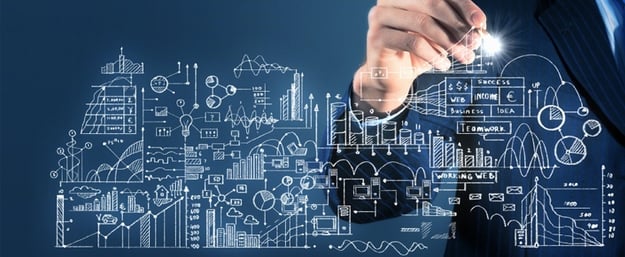 With each system making decisions on it’s own, facilitating flow based on known machine capacity and up-to-minute feedback data, it produces a self-balancing system that can be viewed and manipulated remotely. There are multiple attributes an operation must need before it is grouped into a Smart Factory 4.0 production facility, these attributes include:
- Decentralization Resolutions - system making decision based off of data presented throughout the production facility
- IT Aid - utilization of system resources to aid humans in complex problem-solving and assistance of tasks that humans are unable to complete
- Systemic Exchange of Information - communication through a network of machines, humans, and the system itself
The perks of this paradigm are extremely beneficial to a facility that is looking for improvement in production and overall efficiency, but along with these perks there are also many drawbacks such as:
- Vulnerability of Susceptible Data - security among systems can become an issue, with the amount of web-usage putting a facility at risk of breaches or exploitations
- Human-Oriented Labor Loss - this is becoming a growing concern as machines are beginning to replace humans in the factory
- Maintenance of Digital Conveyance - overseeing the system can be a challenging aspect based off of human reliability and sustainability
Although these drawbacks are a legitimate concern for the manufacturing industry, Smart Factory 4.0 is still becoming a top choice for operations that are pursuing maximum efficiency. As production facilities are moving toward technology-orientated system integrations, this model could be a step in the right direction.
APS Integration with Smart Manufacturing Technology
Advanced planning and scheduling (APS) systems utilized as a hub that collect data and relay it to upstream or downstream entities are geared very much toward Smart Factory and Industry 4.0. If you are trying to attain Smart Factory 4.0 status, then look into APS as one of the many means to get data cross-integrated and with high visibility.
Video: Multi-Plant APS for Smart Factory & Industry 4.0
In this video, you’ll see how PlanetTogether Advanced Planning & Scheduling (APS) supports multi-plant planning and scheduling in a Smart Factory 4.0 / Industry 4.0 environment. Learn how APS acts as a central hub for real-time data, connecting machines, people, and systems across sites so production can self-balance around true capacity and constraints.
The video demonstrates how PlanetTogether APS helps manufacturers move toward a smart, decentralized production model—where systems make decisions based on live information from IoT-enabled equipment, ERP, and other factory systems. You’ll see how APS can:
– Coordinate schedules across multiple plants and lines while respecting local constraints and machine capabilities
– Use up-to-the-minute feedback to automatically adjust production flow and minimize waiting, idle time, and bottlenecks
– Provide a systemic exchange of information between machines, humans, and higher-level systems so decision-making isn’t trapped in siloed spreadsheets or legacy tools
This video is ideal for operations leaders, smart manufacturing teams, and Industry 4.0 project owners who want to turn real-time factory data and IoT connectivity into optimized, multi-plant schedules.
Make Industry 4.0 Pay Off with Better Planning & Scheduling
Industry 4.0 and Smart Factory 4.0 promise self-regulating, self-balancing production—machines, systems, and people all connected through IoT and real-time data. But without the right planning and scheduling brain, that data never becomes better decisions. Advanced Planning & Scheduling (APS) is what turns connected equipment and systems into coordinated, profitable production flow.
Download our one-page “The Money Is in the Planning” infographic to see how APS can help you:
- Use real-time data from machines, IoT devices, and ERP to create optimized, constraint-aware schedules across one or many factories
- Support decentralized resolutions by giving systems and teams a shared, accurate model of capacity and demand
- Turn the systemic exchange of information in Smart Factory 4.0 into less waiting, fewer bottlenecks, and higher throughput
- Balance automation and human intervention by giving managers clear visibility and simulation tools rather than static reports
- Translate your Smart Factory / Industry 4.0 investment into measurable improvements in utilization, lead time, and profitability
Use this infographic with your operations, IT, and executive teams as a fast way to connect Industry 4.0 concepts to the planning & scheduling decisions that actually drive results on the factory floor.
