Advanced Planning and Scheduling
Cloud-based ERP: a Look at QAD
One of the most well-known cloud-based ERP programs is QAD. This program, and the company that sells it, has updated its version.
Integrated manufacturing systems still miss targets. Find the planning-to-execution gaps that leak 2–5% of revenue, and how to reduce them.
You’ve done what many leadership teams struggle to do.
You integrated your ERP. You connected MES. You aligned demand planning. The plumbing works! Data moves between systems. On paper, your digital foundation is strong.
And yet…
OTIF is still inconsistent.
Expediting still happens.
Changeovers still eat capacity.
Margins feel tighter than they should.
That isn’t a contradiction. It’s common.
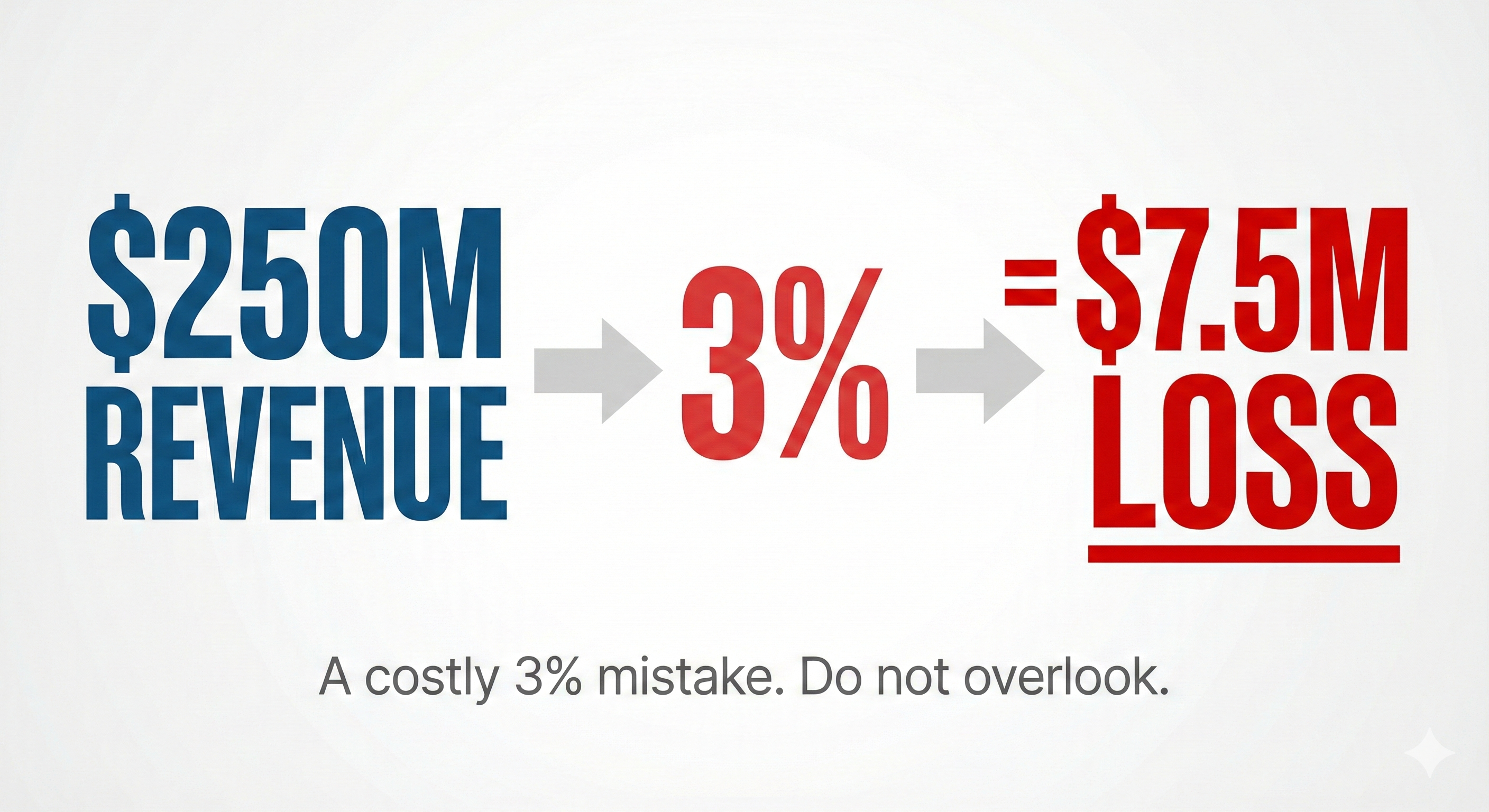
We see the same pattern, again and again. Modern systems. Clean integrations. And still, 2–5% of revenue quietly lost to execution gaps. Not because systems aren’t connected but because decision quality between planning and execution isn’t disciplined.
Integration moves data. It does not guarantee good decisions.
.jpg?width=1024&height=559&name=unnamed%20(1).jpg)
Before entering manufacturing, I spent 14 years in the data integration industry. I appreciate interconnected systems. They create the possibility to improve decisions.
But possibility is not performance.
Having more data does not automatically improve the quality of production decisions. It only gives you the opportunity to improve them. The execution gap is the space between what your systems know and what your production schedule can actually hold under real-world variability.
We still regularly see organizations running multi-plant operations, regulated environments, or constrained bottling lines on spreadsheets. Not because they are careless. Because spreadsheets offer perceived control and familiarity.
But spreadsheets fracture your connected architecture. They cannot model labor constraints accurately. They cannot enforce sequence-dependent changeovers. They cannot dynamically absorb QA hold variability. They cannot expose tradeoffs when an expedite displaces a profitable order.
In one nutraceutical manufacturer we recently worked with, 8planners were spending the majority of their time manually reconciling scheduling issues in Excel rather than optimizing flow. OTIF hovered near 75%,with a target north of 95%. The systems were integrated. The schedule was not execution-ready.
In another example, a beverage bottling environment, constrained lines were limiting growth. Leadership believed they were capacity-bound. Once sequencing and changeover modeling was complete, they uncovered a 10–15% throughput opportunity and approximately 20% changeover reduction, without adding assets or head count.
Their ERP, Demand Planning, and SCADA systems were connected. The decisions were not disciplined. That difference is where margin leaks.
When we quantify performance leakage across industries, it rarely shows up as a single catastrophic failure. It shows up as small, repeated inefficiencies that compound over time.
One of our aseptic food customers was handling all of their allergen sequencing and cleanout modeling within spreadsheets. Thousands of small batches were being manually arranged, with no visibility into constraint collision. As a senior leader put it, “Excel can’t reliably handle this level of complexity.”
Each issue looks manageable in isolation. Together they quietly erode service, throughput, and margins.
If you recognize yourself in this list, you are not alone. You are amongst many modern organizations that have integrated technology stacks but have not yet made scheduling an execution discipline.
In a $250M operation, 3% is $7.5M. That is not a rounding error. That is a structural leak.
Here is the uncomfortable truth.
Most organizations believe integration equals readiness.
It does not.
ERP is excellent at managing transactions and planning logic.
MES executes what it is given.
Forecasting helps you align supply and demand at a macro level.
But there is a critical layer between planning and execution that determines whether margin, throughput, and service levels actually hold.
That layer is production scheduling.
An MES will execute an inefficient schedule just as faithfully as it executes a disciplined one. If the schedule cannot survive contact with labor variability, equipment downtime, or material delays, your digital stack will just execute the inefficiencies faster.
Leadership often responds by tightening ERP parameters or enhancing MES reporting. Rarely do they pause to examine whether the schedule itself is built on explicit, constraint-aware logic.
Execution-ready scheduling is not about prettier Gantt charts. It is about enterprise visibility, actionable insights, and accountability. It requires modeling of real constraints - including machine capacity, labor, materials, setups, cleanouts, allergens, and other secondary constraints. It requires scenario evaluation before accepting new orders and governance around how tradeoffs are made.
Your team should be able to recover from unplanned disruptions on the shop floor in minutes or hours, not days. The enterprise visibility into schedule adherence as a KPI becomes a new norm.
This is where software alone is insufficient.
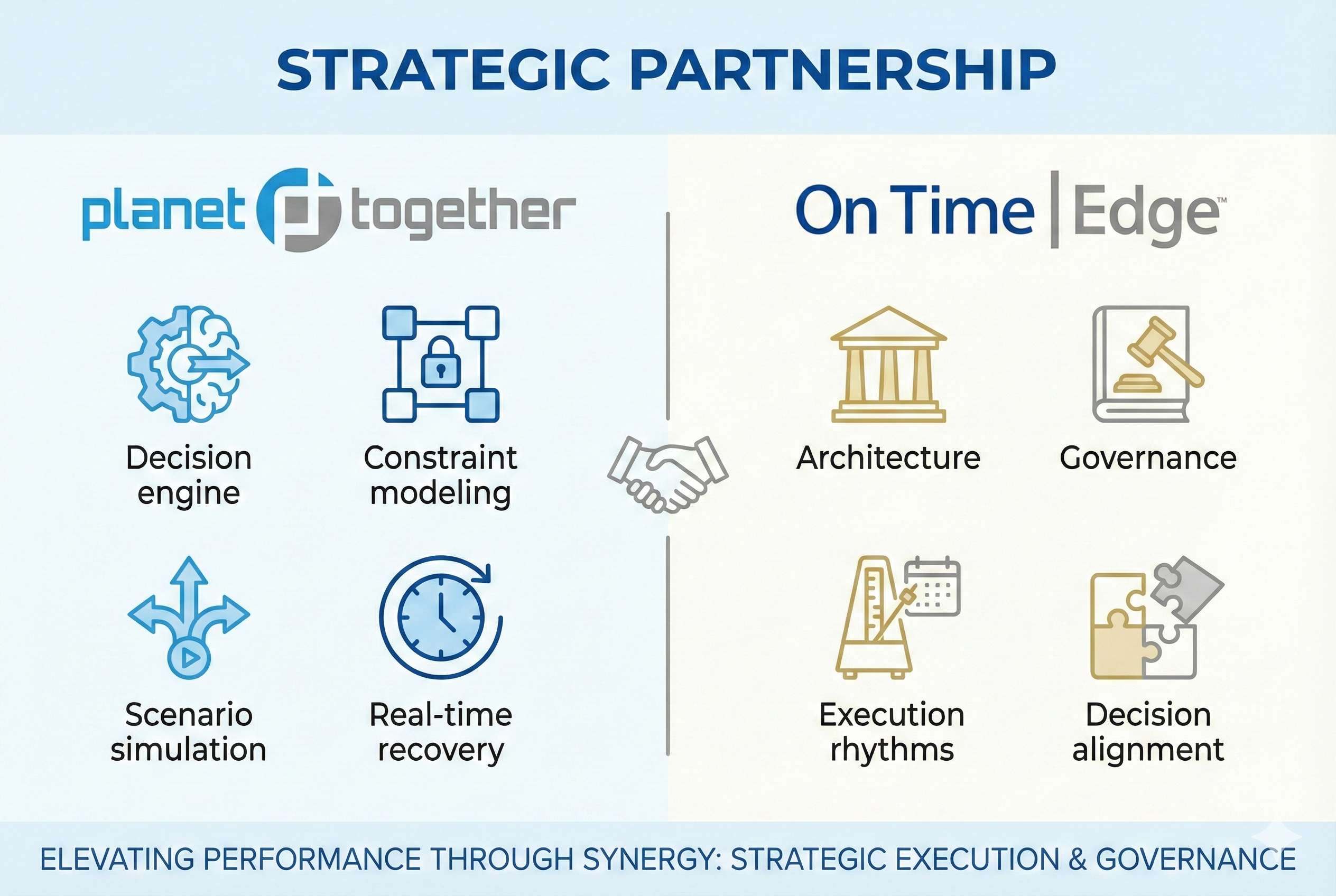
PlanetTogether APS provides the constraint-based scheduling engine that allows your teams to see tradeoffs, model reality, and build executable plans.
On-Time Edge ensures that scheduling is embedded into your enterprise operating model not layered on as another tool or an afterthought. That means aligning architecture, decision rights, execution rhythms, and accountability that translate into measurable performance outcomes.
The goal is not more integration.
The goal is accountable execution.
If you suspect performance is leaking but cannot clearly quantify where, we are hosting executive diagnostics at Hannover Messe.
In 15–30 minutes, we will help you map:
We are also offering a limited number of sponsored Hannover Messe passes to selected manufacturing professionals who qualify for the executive diagnostic. Get more information here.
If you want to set up an executive diagnostic with us at Hannover Messe, sign up now:

One of the most well-known cloud-based ERP programs is QAD. This program, and the company that sells it, has updated its version.
Materials requirement planning is a key component in production & manufacturing. Materials requirement planning has functions that optimize...
Microsoft AX provides solid operational backbone manufacturers require to improve the volume of production, meet consumer demands, and reduce costs.