Lean Manufacturing
Five Benefits of Lean Project Management
It is essential to understand the five benefits of lean project management within an operation that is in need of efficiency enhancement.
Four factors for running an effective kanban replenishment meeting are absolutely essential when attempting to increase productivity within an operation.
Within Kanban, there are three critical components when ensuring that the methodology gets the project off the ground successfully. These components include strategy review, the replenishment/commitment meeting, and the standup meeting.
Utilizing these components can greatly aid your Kanban operation and will effectively ensure that all requirements are met. While these are effective, there are also four key factors that teams need to consider for running an effective Replenishment Meeting. These are based off of various experiences utilizing Kanban for company’s product development.
Therefore, here are the four factors for running an effective Kanban Replenishment Meeting.
The four factors for running an effective Kanban Replenishment Meeting pertain to the following:
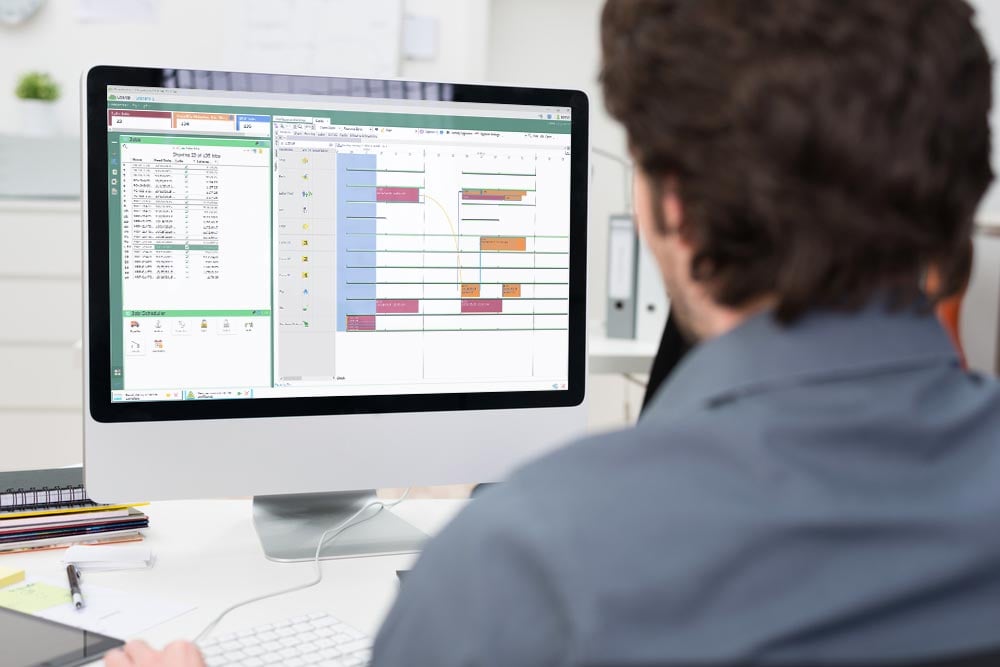
A software that can easily aid with implementation of Kanban planning and methodology is PlanetTogether’s Advanced Planning and Scheduling Software. PlanetTogether’s APS software is a must have for manufacturers that are seeking to improve efficiency within a manufacturing operation while cutting costs and increasing profitability. Advanced Planning and Scheduling Software is essential for manufacturing operations around the globe to maintain a competitive edge and keep up with industry technology.
Advanced Planning and Scheduling (APS) software has become a must for modern-day manufacturing operations due to customer demand for increased product mix and fast delivery combined with downward cost pressures. APS can be quickly integrated with a ERP/MRP software to fill gaps where these systems lack planning and scheduling flexibility and accuracy. Advanced Planning and Scheduling (APS) helps planners save time while providing greater agility in updating ever-changing priorities, production schedules, and inventory plans.
Implementation of Advanced Planning and Scheduling (APS) software will take your manufacturing operations to the next level of production efficiency, taking advantage of the operational data you already have in your ERP.
In this video, you’ll see how to use and compare what-if scenarios in PlanetTogether Advanced Planning and Scheduling (APS). By cloning your current schedule and testing alternative plans, you can evaluate different Kanban replenishment choices, priorities, and capacity assumptions—before you commit them to the team’s board or to the shop floor.
A Kanban replenishment meeting isn’t just about filling the board—it’s where you decide which work really deserves capacity. When objectives are fuzzy, criteria aren’t clear, or workflow isn’t visible, teams end up pulling the wrong work, overloading resources, and fighting fires instead of improving flow. Advanced Planning & Scheduling (APS) helps connect those replenishment decisions to a realistic, profit-protecting schedule.
Download our one-page “The Money Is in the Planning” infographic to see how planning and scheduling choices quietly turn into:
Use it as a quick checklist in your next replenishment meeting to link what you pull into Kanban with the capacity you actually have—so every commitment supports flow, delivery, and profitability.

It is essential to understand the five benefits of lean project management within an operation that is in need of efficiency enhancement.
Explore Lean Construction principles and see how PlanetTogether APS enhances planning, reduces waste, and boosts project efficiency.
What exactly are planning, tasks, and Kanban boards? It is essential to understand these topics when attempting to implementing a new methodology.