As your demand for capacity grows, one production facility may not be enough, which means it may be time to start considering a multi-plant operation. This does mean an increased production capacity, but this also means driving your operation headlong into the more challenging component of multi-plant planning and scheduling.
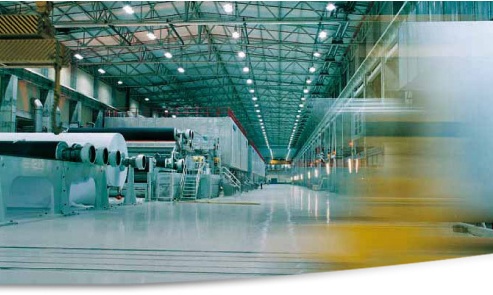 Proper planning for a single production facility is already an everyday challenge, but two or more interdependent facilities in your supply chain can involve an exponential number production sequencing and scheduling challenges to consider and plan for. Multi-plant manufacturing and production operations need to properly plan and schedule for the conjoined internal flow and coordinated efforts of production in order to meet the demands of the internal and external upstream and downstream customers. So, how does an operation even begin when trying to scale production in this manner? One solution for multi-plant planning is that of utilizing SAP as a standalone ERP; another is to use SAP in conjunction with APS as a tightly-integrated add-on to further tap into the capabilities of SAP.
SAP Multi-Plant Planning
Multi-plant planning through SAP ERP system utilizes material requirements planning (MRP) for various production facilities. This model is a decision-making system that schedules production among various locations that manufacture the same or interdependent production items. It relieves the headache of dealing with the ordering of materials throughout multiple operations and allows for materials to flow smoothly through different production facilities.
Other advantages of SAP to multi-plant operations include:
- MRP Procurement Keys
- Customization of MRP
- Easy Transfer of Inventory
- Alternative Facility Production
- Alternative Operation Termination
These perks, with the proper data presented, can easily allow an operation to come closer to overall production efficiency. Although this system offers many benefits, it is not necessarily a fix all. Many production facilities are taking the next step in manufacturing through integration of ERP and APS systems.
Integrating APS with SAP
Advanced planning and scheduling (APS) systems can be readily be integrated with ERP systems such as SAP. To get more out of SAP All In One and SAP Business One, APS integrations have long been the chosen add-on that extends the planning, scheduling and simulation capabilities for SAP ERP and production tools.
Along with an ease of APS integration with SAP, benefits of APS also include:
- Improved Delivery Performance
- Boost in Profit
- Reductions in Inventory and Labor Cost
- Six-Month ROI
- Increased Capacity
- Waste Reduction
- "What-if" scenarios while running live production
Easily reschedule production orders, visualize and resolve bottlenecks, analyze “what-if” situations, and eliminate the need for manual input data. APS systems are becoming a popular choice for manufacturing and production operations. APS is the logical next step toward the goal of minimizing all forms of waste and compressing lost time.
Multi-Plant 101: PlanetTogether APS for SAP Multi-Site Scheduling
See how PlanetTogether APS extends SAP from single-plant MRP to true multi-plant scheduling. In this Multi-Plant 101 video, you’ll see how PlanetTogether connects to SAP to coordinate production across multiple facilities, balance capacity, and manage sequencing and transfers between plants. Instead of relying only on SAP’s MRP logic, planners can use APS to visualize constraints, reschedule quickly, and run what-if scenarios across the entire network. This is an ideal next step if you’re using SAP for multi-plant planning and want more advanced capacity planning, scheduling, and analytics without replacing your ERP.
SAP Handles Your Data—APS Unlocks Your Multi-Plant Capacity
In this article, you’ve seen how SAP multi-plant planning uses MRP to coordinate materials and orders across multiple facilities—and how powerful that can be for procurement, inventory visibility, and high-level planning. But you’ve also seen the limits: as you add more plants, products, and interdependencies, the sequencing and scheduling challenges grow exponentially, and MRP alone can’t fully handle capacity, constraints, and what-if analysis.
That’s where Advanced Planning and Scheduling (APS) comes in. By tightly integrating APS with SAP, manufacturers can easily reschedule production orders, visualize and resolve bottlenecks, test what-if scenarios while running live production, and reduce manual input.
Our white paper, “Why ERP Alone Is Not the Answer,” explains exactly where ERP systems like SAP excel—and where you need APS to go further. It shows how adding APS on top of SAP gives you the multi-plant capacity planning and scheduling capabilities required to minimize waste, compress lead times, and boost profitability.
In this guide, you’ll learn how to:
- Move beyond MRP-only planning to constraint-aware, multi-plant capacity management
- Quote and keep realistic delivery dates across multiple locations instead of relying on padded lead times or expediting
- Build optimized production schedules that account for real constraints—machines, labor, changeovers, and inter-plant flows
- Minimize labor and inventory costs while maintaining high service levels in a multi-site network
- Use SAP + APS together as a unified planning and scheduling environment, rather than treating APS as a disconnected tool
If you’re relying on SAP for multi-plant planning and starting to feel the limits of MRP-only scheduling, this white paper is your next step.
