Make to Stock
What is Make to Stock (MTS) Planning?
Make to Stock (MTS) involves creating demand forecasts and producing goods to match this amount. Items are held and shipped when a demand is received.
In manufacturing, having a safety stock will ensure that your production can flow without disruptions and that you don't experience stock outs.
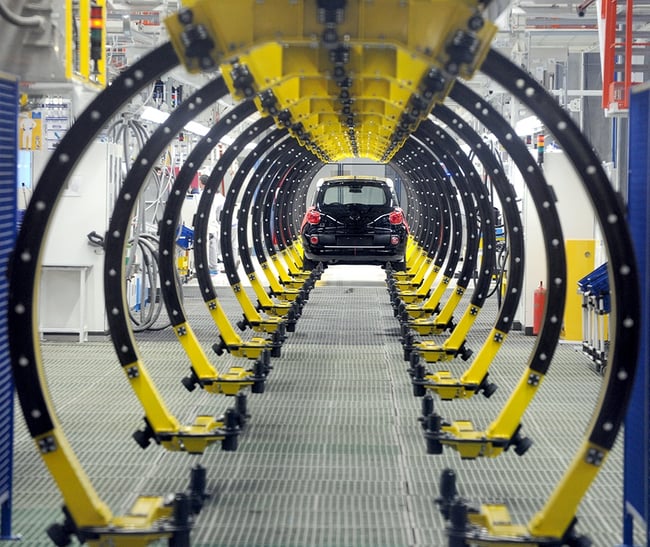 In manufacturing, there can be a lot of uncertainty surrounding the demand signals. Uncertainty in the quantity of an order can occur when the master production schedule is increased or decreased to reflect changes in customer orders that were not anticipated. This uncertainty can be detrimental to the success of your business as you can be left with either too much or too little supply to fulfill the incoming demand.
As MRP uses the master production schedule to determine net resource and material requirements, a safety stock can be used to provide a buffer against variations in demand and allow manufacturers to fulfill customer demands in a timely manner.
Safety stock can be defined as the extra inventory that is carried in order to reduce the chance of a stock out due to demand variability. While it is typically not recommended to hold a large excess of materials, a safety stock can help you manage your inventory, ensure that demands are being met, and minimize costs incurred by carrying excess inventory.
Simply put, having a safety stock reduces your chances of experiencing a stock out and having unhappy customers. It helps prevent disruptions within your production facility in occurrences where you wouldn’t be able to receive materials to fulfill your customer orders.
In certain industries, stopping production unexpectedly due to material shortage can be extremely costly. In the automotive industry, the average cost of downtime is $22,000 per minute. Having a safety stock will provide you with a buffer to allow you to continue with production until you are able to receive additional materials and mitigate the losses that would occur.
A common challenge for many manufacturers is to determine how many units they should keep in their safety stock. This can be because holding excess inventory is not feasible due to space limitations or due to high inventory holding costs.
As such, manufacturers should focus on items that have a high amount of inconsistency in consumption. Items that have a consistent consumption pattern can rely on forecasting strategies to determine inventory requirements without needing a buffer.
PlanetTogether’s Advanced Planning and Scheduling system allows you to specify a safety stock for each item and sub-component. If the on-hand quantity of the item falls below the safety stock quantity, the Inventory Plan within PlanetTogether will display a warning to alert the material planner and/or scheduler that additional material is required.
I have actually been able to reduce on-hand Raw Materials significantly, and it’s interesting. The observation is that I tend to cut it too close, but somehow we never run out! Folks have been used to over-buying to “be safe” for so long, that following the Inventory Plan (MRP) makes people nervous, but again, I never have run out, so I stand on that. I have had to rush in materials due to a surge in unplanned orders resulting in raw material demand, but I have those networks set up, so no biggie.
In addition, PlanetTogether’s APS software allows you to input replenishment minimums and maximums to trigger the system to generate work or purchase orders when the on-hand quantity falls below the minimum value. For example, if you want to keep 500 units of a certain item, you could set the replenishment minimum value to 500. Then, when the on-hand quantity falls below 500 as the inventory is allocated to production orders, MRP will automatically create jobs or purchase orders to increase this quantity to the maximum quantity specified.
Advanced Planning and Scheduling Software has become a must for modern-day manufacturing operations as customer demand for increased product assortment, fast delivery, and downward cost pressures become prevalent. These systems help planners save time while providing greater agility in updating ever-changing priorities, production schedules, and inventory plans. APS Systems can be quickly integrated with an ERP/MRP software to fill the gaps where these systems lack planning and scheduling flexibility, accuracy, and efficiency.
With PlanetTogether APS you can:
The implementation of an Advanced Planning and Scheduling (APS) Software will take your manufacturing operations to the next level of production efficiency by taking advantage of the operational data you already possess in your ERP system. APS is a step in the right direction of efficiency and lean manufacturing production enhancement.
In this video, you’ll see how PlanetTogether Advanced Planning & Scheduling (APS) helps manufacturers plan safety stock and capacity together to avoid stockouts and excess inventory. Learn how to use PlanetTogether’s Inventory Plan with MRP and ERP data to set safety stock levels, replenishment minimums and maximums, and realistic production schedules that keep material flowing.
We walk through how APS and MRP combine the master production schedule, demand variability, and on-hand inventory to calculate when you need to replenish materials and how much buffer is required. You’ll see how planners can:
– Define safety stock for items and sub-components based on variability in consumption
– Get proactive alerts when on-hand inventory falls below safety stock or replenishment minimums
– Automatically generate jobs or purchase orders to restore inventory to the target level
– Balance service levels, carrying costs, and capacity constraints so you are not overbuying “just to be safe” or risking stockouts
This video is ideal for materials planners, demand planners, and inventory managers who need to buffer against uncertainty while still supporting lean, efficient operations with PlanetTogether APS.
Safety stock protects you from uncertain demand and supply disruptions—but without the right materials planning process, it can quickly turn into excess inventory and higher carrying costs. The real value comes when safety stock is built into a disciplined MRP and APS-driven inventory plan that tells you exactly when to buy and how much to hold.
Download our Material Requirements Planning (MRP) Infographic to see how you can:

Make to Stock (MTS) involves creating demand forecasts and producing goods to match this amount. Items are held and shipped when a demand is received.
Make to order and make to stock are two forms of production processes that need to be considered when attempting to create a production process.
With excess inventory, there are advantages and disadvantages to your overall operation. You may fulfill orders quickly but risk holding obsolete...