manufacturing technology
5 Manufacturing Industry Challenges in 2020
There are 5 manufacturing industry challenges to keep in mind as you seek to improve operations around the globe.
The importance and advantages of automation in manufacturing and production.
It seems like new technologies are emerging and reshaping the way we work every day. In the manufacturing industry, the use of automation is rising and gaining traction. The main goal of automation is to have machines or applications that perform the repetitive, time-consuming, and potentially dangerous tasks previously performed by labor resources.
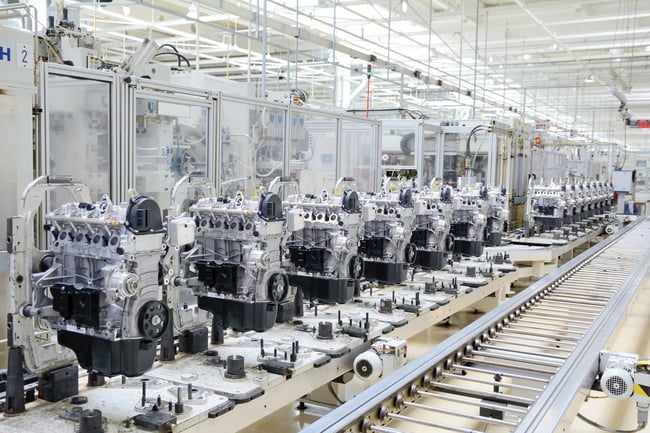
After the effects of the 2020 global pandemic, we will see a continuous rise in the implementation of automation in all parts of the manufacturing process. From production and assembly to tracking and monitoring, the benefits of automation will be observed. Physical distancing measures causing restrictions in the supply chain are likely to boost the demand for automation to allow manufacturers to meet production demands using fewer labor resources.
One of the main benefits of automation is that tasks are able to be performed at a constant speed for longer amounts of time. This means that you can increase your overall production output by having your machines run for longer periods of time. Furthermore, the use of machines can allow you to maximize your production space by adding more workstations.
Machines can be programmed to perform highly skilled and precise motions which can increase the consistency and quality of your products. When production processes are automated, you can have the peace of mind that the quality of your products will remain at a satisfactory level. This will save you time and money as fewer scraps will be produced and less re-work will be required to create high-quality products.
While it is true that automating operations can reduce the number of physically demanding and manual jobs, workers now have the ability to spend their time doing more fulfilling jobs that would not be possible if their time was solely allocated to doing manual labor. Automation will take over the repetitive, time-consuming, and potentially dangerous tasks involved in production to give workers more time to do management, problem-solving, and complex critical thinking tasks. Companies may need to invest in training to smooth the transition while implementing automated processes.
The COVID-19 pandemic highlighted the fragility of the current supply chain models. Many companies that relied on large amounts of manual labor in production were forced to shut down which caused disruptions in the global supply chain. An increase in automation would allow those same companies to require fewer workers on the shop floor and would have made them more resilient to the disruptions caused by the pandemic.
Whether your goal is to cut costs, increase production, or save time, automation can help you achieve it. At PlanetTogether, we provide a solution to automatically create and optimize your production schedules so that you can save hours of your time.
Before it took hours to schedule [our production] manually because scheduling was based on reports, now it only takes seconds.
Advanced Planning and Scheduling Software has become a must for modern-day manufacturing operations as customer demand for increased product assortment, fast delivery, and downward cost pressures become prevalent. These systems help planners save time while providing greater agility in updating ever-changing priorities, production schedules, and inventory plans. APS Systems can be quickly integrated with an ERP/MRP software to fill the gaps where these systems lack planning and scheduling flexibility, accuracy, and efficiency.
The implementation of an Advanced Planning and Scheduling (APS) Software will take your manufacturing operations to the next level of production efficiency by taking advantage of the operational data you already possess in your ERP system.
In this video, you’ll see how PlanetTogether Advanced Planning & Scheduling (APS) supports capacity planning in highly automated manufacturing environments. As automation takes over repetitive, time-consuming, and potentially dangerous tasks, manufacturers must ensure that machines, lines, and labor are all loaded correctly to achieve the promised gains in output, quality, and resiliency.
The video demonstrates how PlanetTogether APS helps you:
– Create optimized production schedules that keep automated equipment running at a constant, efficient pace
– Maximize throughput on bottleneck resources so you can increase production output without adding new machines or headcount
– Coordinate labor with automation so workers can focus on more fulfilling tasks like problem-solving and continuous improvement instead of manual, repetitive work
– Build resiliency into your operation by modeling different capacity scenarios and quickly adjusting when demand, staffing, or constraints change
This video is ideal for operations leaders, plant managers, and scheduling teams who are investing in automation and want capacity planning with APS to unlock higher output, consistent quality, and greater resilience.
Automation can increase output, improve quality, and make work safer and more fulfilling—but those benefits only materialize when your planning and scheduling are good enough to keep automated resources fully utilized. Without the right planning engine, even advanced machines end up under-loaded, waiting on materials, or stuck behind bottlenecks.
Download our one-page “The Money Is in the Planning” infographic to see how combining automation with Advanced Planning & Scheduling (APS) can help you:
Use this infographic with your operations, engineering, and leadership teams as a quick visual guide to where better planning and scheduling unlock the full value of automation.

There are 5 manufacturing industry challenges to keep in mind as you seek to improve operations around the globe.
Shop floor control has many advantages that can further enable your supply chain to improve. Advantages of shop floor control have enabled...
Understanding the five steps to achieve supply chain synchronization is key when attempting to synchronize your overall supply chain process.