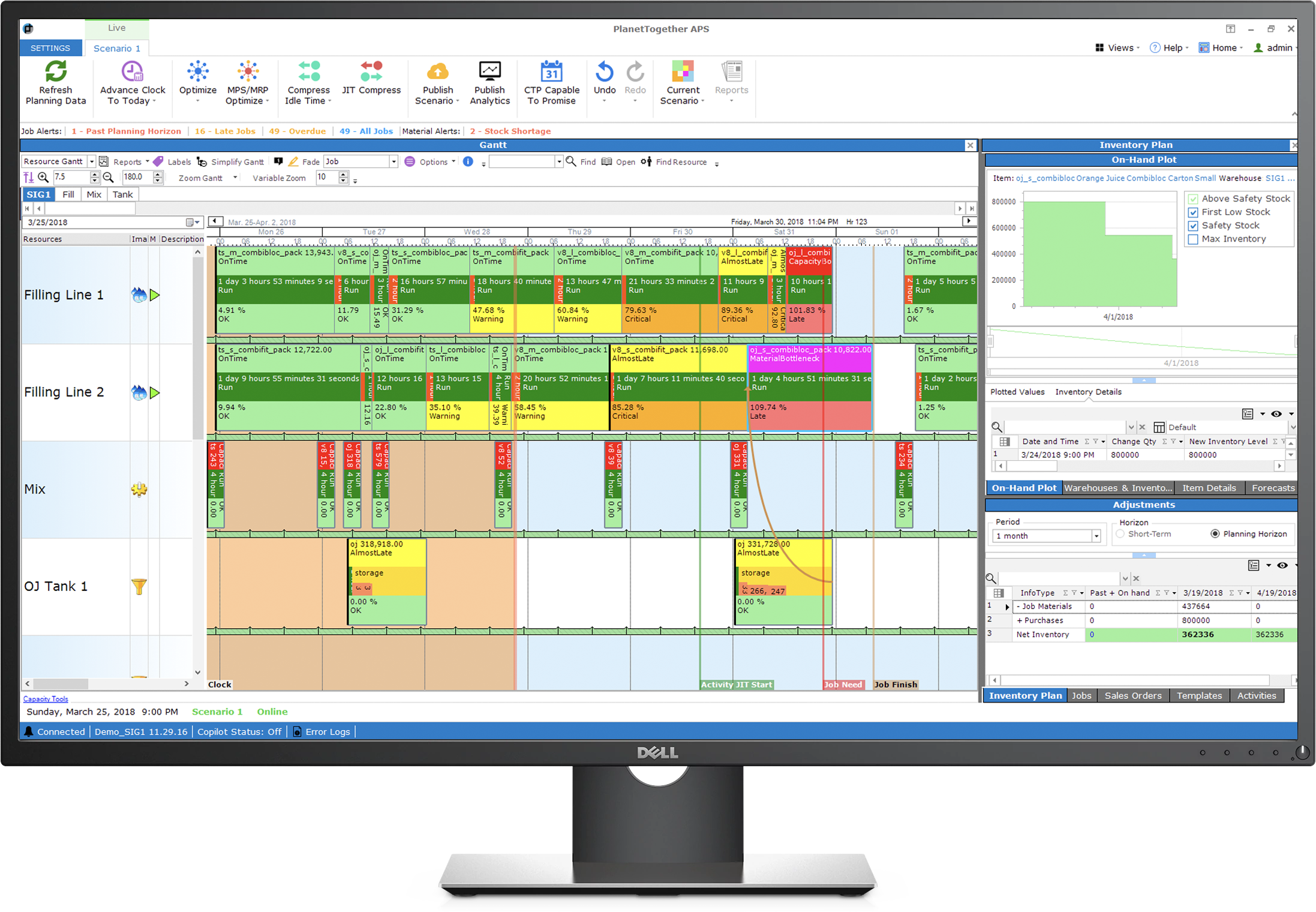
Finite Capacity Scheduling and Constraint-Based Planning
Learn how finite capacity scheduling helps planners manage constraints, avoid bottlenecks, and build executable production schedules.
By PlanetTogether
Published: Apr 18, 2016
| Last Verified: Apr 30, 2026
Finite capacity scheduling helps manufacturers build production schedules around real plant constraints. These constraints include machines, labor, materials, tools, changeovers, and supplier limits. When schedules ignore those limits, bottlenecks spread across the plant. Due dates also become harder to protect.
Constraint-based planning gives planners a more realistic way to balance demand with available capacity. It helps teams create schedules the plant can execute, not just schedules that look possible in a planning system.
Finite Capacity Scheduling, Defined
Finite capacity scheduling creates production plans around real limits on machines, labor, materials, tools, and changeovers. Instead of assuming every order can run at once, planners model constraints before releasing the schedule. This helps manufacturers spot bottlenecks, balance loads, protect due dates, and build schedules the plant can execute.
What Finite Capacity Scheduling Means in Manufacturing
Finite capacity scheduling matches production demand to the resources that can realistically complete the work. It accounts for available machine time, labor skills, material supply, tooling, setup time, run rates, and changeovers.
Many manufacturers start with rough-cut capacity planning. That approach helps planners see whether demand roughly fits available capacity.
However, the schedule may still miss key details. A specific machine, labor group, material, or tool may not be available when the order needs to run.
As a result, planners need to connect each order to the actual resources that can run it. They also need to know when those resources are available. That connection turns a high-level plan into a schedule the plant can execute.
Why Infinite-Capacity Plans Create Bottlenecks
Infinite-capacity plans assume resources can handle more work than they can actually complete. Therefore, the schedule may look possible on paper. Meanwhile, the plant struggles with queues, late orders, overtime, and missed handoffs.
They may also come from outside the plant. Common examples include late supplier deliveries, changing customer demand, and material shortages.
Once planners know where constraints exist, they can protect the resources that drive throughput. They can also build backup plans before a small delay turns into a schedule-wide problem.
How to Identify Machine, Labor, Material, and Changeover Constraints
Start by identifying the resources that can limit flow through the plant. A bottleneck may be a machine, a skilled labor group, a material, or a tool. It may also be a storage area, packaging step, or supplier dependency.
Common production constraints include:
Components that must match customer orders
Available time on machines and production lines
Raw materials and purchased parts
Labor with the right skills or certifications
Tools, fixtures, or molds needed for specific jobs
Changeover time between products or batches
Packaging and finished-goods storage
Transportation to customers, vendors, or distribution points
External constraints also matter. For example, planners should ask:
Is market demand changing faster than the schedule can adjust?
Can suppliers deliver parts and materials on time?
Are customers requesting more change orders than usual?
Will labor availability or overtime rules affect the schedule?
After planners identify these limits, they can make better scheduling trade-offs. For example, they may stage material near a bottleneck machine. They may also cross-train operators, adjust changeover sequences, or reroute work to a qualified alternate resource.
How APS Uses Constraint-Based Planning to Build Feasible Schedules
Advanced Planning and Scheduling software helps planners turn constraints into scheduling rules. Instead of planning against unlimited capacity, APS accounts for real production limits.
These limits include machine capabilities, labor skills, run rates, changeover time, material availability, and tooling requirements. That gives planners a schedule based on how the plant actually runs.
APS also gives teams a faster way to respond when demand, materials, or capacity changes. For manufacturers that rely on ERP or MRP systems, APS can fill the planning gap between order data and shop-floor execution.
Through ERP and APS integration, planners can use operational data to build more realistic schedules. They can also improve visibility across planning, production, sales, and operations teams.
How Bottleneck Data Helps Planners Improve Throughput
Once APS highlights a weak spot, planners can test better ways to run the schedule. They may reroute work, rebalance loads, adjust changeovers, cross-train labor, or compare make-versus-buy options.
The goal is not just a faster schedule. The goal is a feasible schedule that improves throughput without hiding constraints. When planners see where capacity is tight, they can focus improvement work on the resources that matter most.
For example, the Standard Process production scheduling case study shows how better visibility helps teams act earlier. Planners can address constraints before they become larger manufacturing issues.
With PlanetTogether, we implement solutions to problems with confidence, and before constraints become a manufacturing issue.
GREGORY VAN LEIRSBURG, PRODUCTION SCHEDULER, STANDARD PROCESS SUPPLEMENTS
When to Move from Rough-Cut Capacity Planning to APS
Rough-cut capacity planning can work when demand is stable and production rules are simple. However, manufacturers often need APS when resource constraints change often. APS also helps when planners spend too much time manually rebuilding schedules.
Consider APS when:
Machines, labor, or materials often limit schedule performance
Planners rely on spreadsheets to fix ERP or MRP schedule gaps
Changeovers affect throughput and delivery performance
Customer demand changes faster than the current schedule can support
Teams need better visibility into bottleneck resources
Leadership needs clearer trade-offs before making capacity decisions
With PlanetTogether APS, manufacturers can:
Create schedules that balance production efficiency and delivery performance
Maximize throughput on bottleneck resources
Synchronize supply with demand to reduce excess inventory risk
APS is most valuable when planners need to compare options before committing the schedule. For example, teams can evaluate whether to resequence work, split an order, add overtime, or adjust material priorities. They can also protect a bottleneck resource for a higher-value order.
A Simple Check for Finite Capacity Scheduling
Use rough-cut capacity planning when you only need a high-level capacity check. Use finite capacity scheduling when you need to commit orders against real machine, labor, material, and changeover limits. Use APS when planners need to model constraints, compare scenarios, and update schedules faster than spreadsheets or ERP/MRP tools allow.
Video: Finite Capacity Planning and Bottleneck Management in PlanetTogether APS
This video shows how PlanetTogether APS helps planners move from rough-cut or infinite-capacity plans to finite capacity schedules. It covers bottleneck visibility, machine and labor constraints, material availability, changeovers, and scenario-based planning.
Finite Capacity Scheduling FAQs
What is finite capacity scheduling?
Finite capacity scheduling is a planning method that builds production schedules around real limits. These limits include machine availability, labor skills, material supply, tooling, changeovers, and run rates. It helps planners create schedules the plant can realistically execute.
How is finite capacity scheduling different from rough-cut capacity planning?
Rough-cut capacity planning gives a high-level view of whether demand fits available capacity. Finite capacity scheduling goes deeper. It sequences work against specific constraints, resources, and timing rules.
What is constraint-based planning?
Constraint-based planning builds a schedule around the limiting factors that affect production. These constraints may include bottleneck machines, skilled labor, material shortages, tooling, storage, packaging, or supplier delays.
How does APS help with finite capacity scheduling?
APS software helps planners model constraints, compare scenarios, identify bottlenecks, and generate feasible schedules from current production data. It also helps planners adjust schedules faster when demand, capacity, or material availability changes.
When should a manufacturer move from spreadsheets to APS?
A manufacturer should consider APS when planners spend too much time manually rescheduling. APS also helps when bottlenecks are hard to see or when ERP/MRP data does not produce feasible production schedules.
Turn Finite Capacity Constraints into a Planning Advantage
Every plant has finite capacity. The challenge is knowing which constraints affect the schedule first. Download The Money Is in the Planning infographic to see where better planning can improve throughput, reduce firefighting, and help teams build schedules around real production limits.
Identify bottleneck resources before they stall the operation
Replace infinite-capacity assumptions with constraint-aware schedules
Synchronize supply with demand and reduce excess inventory risk
Use ERP/MRP data to support more realistic production schedules
Free planners from manual rescheduling and constant firefighting
Ready to Build a Schedule Your Plant Can Actually Run?