
Predictive Analytics and Adaptive Scheduling in Chemical Manufacturing
Predictive analytics helps chemical manufacturers anticipate demand, materials, equipment, and schedule risks before they disrupt production. Adaptive scheduling uses those signals to update the production schedule.
Together, predictive analytics and adaptive scheduling help planners protect batch sequences, tank capacity, labor, materials, and customer due dates. They are most useful when demand, supply, and plant constraints change faster than a static schedule can keep up.
Answer Capsule: How predictive analytics supports adaptive scheduling
Predictive analytics helps chemical manufacturers see demand, material, equipment, and inventory risks earlier. Adaptive scheduling uses those signals to update production plans before disruptions affect the shop floor. Together, they help planners adjust batch sequences, capacity, labor, and material timing while protecting delivery commitments and plant performance.

The Complexity of Chemical Supply Chains
Chemical supply chains are difficult to schedule because demand, materials, quality rules, and plant constraints often change at the same time. A plant may need to manage batch windows, tank capacity, cleanouts, hazardous materials, process safety management (PSM), and safety rules while still meeting customer dates.
Static schedules often miss these changes. As a result, planners may see:
- Inefficient resource utilization: Equipment, labor, or tanks may sit idle while other resources become overloaded.
- Extended lead times: Bottlenecks, late materials, or sequence conflicts can delay production cycles.
- Inaccurate demand alignment: Production may no longer match current orders, forecasts, or available supply.
Adaptive scheduling helps planners update the schedule when demand, materials, or constraints shift.

What is Adaptive Scheduling?
Adaptive scheduling is a production scheduling method that adjusts the plan when new data changes the operating picture. Unlike a static schedule, an adaptive schedule can respond to demand changes, equipment downtime, maintenance needs, raw material shortages, and production delays.
In chemical manufacturing, adaptive scheduling is useful because batch sequence, tank availability, cleanout rules, and material timing can limit what the plant can run next. Therefore, planners need schedules that can change while still protecting priorities and constraints.

The Role of Predictive Analytics
Predictive analytics uses historical data, current signals, and statistical models to estimate what may happen next. In supply chain planning and production scheduling, predictive analytics can support demand forecasting, maintenance planning, and inventory decisions.
- Demand forecasting: Helps planners estimate demand changes based on patterns, seasonality, and market signals.
- Maintenance scheduling: Helps teams identify equipment risk earlier and plan predictive maintenance before downtime disrupts production.
- Inventory management: Helps planners see where raw material shortages, stockouts, or excess inventory may affect the schedule.
However, predictive analytics only creates value when planners can turn its signals into schedule decisions. Adaptive scheduling provides that bridge.
Decision Framework: When to Use Predictive Analytics for Scheduling
Use this framework to decide whether predictive analytics should support your scheduling process:
- Use adaptive scheduling when demand changes often, materials arrive late, or plant constraints shift during the week.
- Use predictive analytics when historical data can help forecast demand, maintenance risk, inventory needs, or supply delays.
- Evaluate APS when planners need one place to compare demand, materials, capacity, and schedule options before committing to changes.
The best next step is to identify the risk that most often disrupts the schedule. Then, check whether your current planning process can detect that risk early and show its impact on production.

How PlanetTogether Connects Scheduling and Enterprise Data
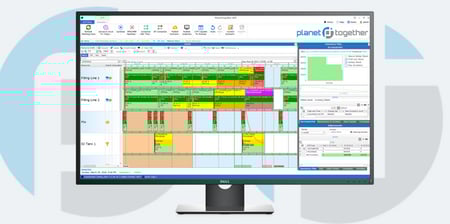
PlanetTogether APS helps manufacturers connect production schedules with resource, material, and order data. In an adaptive scheduling workflow, APS can support visibility into capacity, bottlenecks, sequence, and schedule changes.
PlanetTogether can also connect with enterprise systems such as SAP, Oracle, Microsoft Dynamics, Kinaxis, and AVEVA when those systems are part of the planning environment. These integrations help planning teams use ERP, SCM, and production data in a more connected scheduling process.
Key Features of PlanetTogether in Adaptive Scheduling
- Real-time visibility: Gives planners a clearer view of production schedules, resource allocation, and bottlenecks.
- Scenario planning: Helps planners compare schedule options before they commit to a change.
- Rescheduling support: Helps planners update schedules when demand, materials, labor, or capacity changes.
- System integration: Helps teams align planning data across production, supply chain, and operations.

Integration with SAP, Oracle, Microsoft, Kinaxis, and AVEVA
ERP and supply chain systems often hold the data planners need for adaptive scheduling. APS software integrations help bring that data into the scheduling process so planners can compare demand, materials, capacity, and constraints in one view.
- SAP: Can provide material, order, and MRP data that supports production scheduling decisions.
- Oracle: Can support planning, reporting, and supply chain data used in schedule analysis.
- Microsoft Dynamics: Can help connect planning, operations, and reporting workflows.
- Kinaxis: Can support supply chain planning signals that affect production priorities.
- AVEVA: Can provide operational data that may support maintenance and production planning decisions.
The goal is not more data. The goal is a schedule that reflects current demand, materials, capacity, and production constraints.
Benefits of Adaptive Scheduling with PlanetTogether
Adaptive scheduling with predictive analytics can help chemical manufacturers update schedules faster when conditions change. It can help planners react to raw material shortages, demand changes, maintenance events, and capacity issues.
- Better resource use: Planners can see where equipment, labor, or materials may constrain the schedule.
- Greater agility: Teams can adjust schedules when demand, supply, or plant conditions change.
- Improved delivery reliability: Planners can compare schedule options before making customer commitments.
- Lower disruption: Earlier visibility can reduce last-minute expediting, manual rework, and schedule churn.
These benefits should be measured by plant-level KPIs such as schedule adherence, throughput, inventory, overtime, and on-time delivery.
Separate Demand Planning Risk From What You Can Control
Predictive analytics can help your team respond faster to demand shifts, material constraints, and schedule changes. However, planners still need a clear way to separate controllable planning inputs from outside disruptions.
Use the Demand Planners Infographic to identify which demand planning factors your team can influence. Then, use it to guide better conversations around forecasts, cross-functional planning, and production schedule risk.

FAQs About Predictive Analytics and Adaptive Scheduling
What is adaptive scheduling in chemical manufacturing?
Adaptive scheduling is a production scheduling approach that updates the plan when conditions change. In chemical manufacturing, it helps planners respond to demand shifts, material shortages, equipment downtime, batch sequence limits, and tank or reactor constraints.
How does predictive analytics support adaptive scheduling?
Predictive analytics helps planners anticipate risks before they disrupt production. It can forecast demand changes, maintenance needs, inventory risk, or material delays. Adaptive scheduling then turns those signals into schedule changes.
Why are chemical manufacturing schedules difficult to manage?
Chemical schedules are difficult because batch timing, cleanouts, tank capacity, quality rules, hazardous materials, and safety requirements can limit what the plant can run next. These constraints can change quickly when demand or supply shifts.
What data does adaptive scheduling need?
Adaptive scheduling needs reliable data on demand, inventory, materials, routings, resource capacity, labor, equipment availability, setup rules, cleanout requirements, and order priorities.
When should a chemical manufacturer evaluate APS software?
A chemical manufacturer should evaluate APS software when planners cannot see capacity, constraints, materials, and schedule impact in one planning process. APS may also help when manual rescheduling takes too long or ERP schedules lack production detail.
See Adaptive Scheduling in PlanetTogether APS
If your team needs a better way to connect predictive signals with real production schedules, request a PlanetTogether APS demo.
Request a PlanetTogether APS demo