
How AI Improves Demand Forecast Accuracy in Chemical Manufacturing
Chemical manufacturers need demand forecasts that reflect volatile orders, raw material constraints, regulatory requirements, and production schedule limits. AI can support this work by finding demand patterns across larger data sets than planners can review manually.
However, AI forecasting is most useful when it connects to production planning and scheduling. Forecasts should help planners decide what to make, when to make it, and which materials are needed. They should also show whether the schedule can support expected demand.
This article explains how AI can improve demand forecasting accuracy in chemical manufacturing. It also explains how enterprise integrations support planning decisions and when supply chain teams should evaluate advanced planning tools.
Answer Capsule: AI demand forecasting in chemical manufacturing
AI can improve demand forecasting in chemical manufacturing by analyzing more demand signals, finding patterns faster, and updating forecasts as conditions change. However, forecast accuracy only creates value when it connects to production planning. Chemical manufacturers need forecasts that account for raw materials, batch constraints, capacity, inventory, and delivery commitments.

Why Chemical Demand Forecasts Are Hard to Execute
Demand forecasting is difficult in chemical manufacturing because demand, supply, compliance, and production constraints often change at the same time. A forecast may look accurate at the sales level. However, it may still fail if raw materials, tank capacity, labor, or batch sequence cannot support it.
Volatile Demand Signals
Demand for chemicals can change with macroeconomic conditions, seasonal patterns, customer order shifts, and global trade activity.
Regulatory and Handling Constraints
Safety, environmental, and handling requirements, including OSHA’s process safety management standard, can limit production flexibility. As a result, planners may have fewer options when demand changes quickly.
Complex Product Families and Formulas
Chemical manufacturers often manage products with different formulas, shelf-life rules, batch sizes, and demand patterns. This makes one-size-fits-all forecasting less useful.
Raw Material and Lead Time Risk
Global raw material sourcing can add lead time risk and supply uncertainty. Therefore, planners need forecasts that can adjust as supplier and logistics conditions change.
Traditional forecasting methods can still help, but they may miss fast-changing demand signals or constraint issues. When that happens, manufacturers may carry excess inventory, miss demand, or build production plans that are hard to execute.

How AI Turns Demand Signals Into Forecast Updates
AI supports demand forecasting by helping planners analyze more demand signals, detect patterns faster, and update forecasts as conditions change. In chemical manufacturing, this can help teams connect market demand with materials, capacity, and production constraints.
More Demand Signals in the Forecast
AI can analyze data from historical sales, customer behavior, market trends, weather patterns, and macroeconomic indicators. As a result, planners can review more demand signals than they could manage manually.
Pattern Recognition Across Demand Drivers
Machine learning models can identify patterns across related inputs. For example, a model may find that changes in raw material prices, customer order timing, or seasonal buying patterns affect demand for certain chemical products.
Forecast Updates as Conditions Change
AI models can update forecasts as new data becomes available. This helps planners respond when supply chain bottlenecks, market changes, or customer demand shifts affect the plan.
Scenario Planning for Supply and Capacity Changes
AI-supported planning can help teams compare possible outcomes using simulation models. For example, planners can test how a raw material shortage, regulatory change, or demand spike may affect inventory, capacity, and delivery dates.
Forecast Integration With Planning Systems
Forecasts become more useful when they connect to production planning, scheduling, ERP, and supply chain systems. That connection helps teams turn forecast signals into practical scheduling decisions.

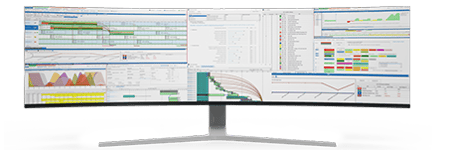
How APS and ERP Integration Connect Forecasts to Production Plans
Demand forecasts create more value when planners can connect them to production schedules, inventory, raw material availability, and capacity. For chemical manufacturers, that connection often requires integration between planning tools and enterprise systems.
Common integration points may include systems such as SAP, Oracle, Microsoft, Kinaxis, Aveva, ERP, MES, recipe data, and process control systems.
PlanetTogether APS can support this planning workflow by helping teams translate demand and supply data into production schedules. The goal is not only to improve forecast visibility. The goal is to help planners see whether production can meet the forecast under real constraints.
Key benefits of integration include:
Visibility From Forecast to Production Schedule
Integration helps connect demand forecasts, inventory, production schedules, procurement, and distribution planning. As a result, planners can see how a forecast change may affect production and delivery.
Current Data Across Planning Systems
When planning and enterprise systems share current data, teams can reduce manual updates and planning delays. This helps keep production plans closer to current demand and supply conditions.
Shared Decisions Across Planning Teams
Integrated planning gives supply chain, production, procurement, and customer service teams a shared view of demand and constraints. Therefore, teams can discuss tradeoffs before committing to schedule changes.
Scenario Reviews Before Schedule Changes
Scenario planning helps managers compare options before they act. For example, teams can review how a raw material shortage, demand spike, or capacity limit may affect inventory and delivery dates.
Planning Models for Chemical Constraints
Chemical manufacturers may need planning models that account for formulas, batch sizes, storage limits, supplier constraints, and multi-site production. Integration helps keep those planning inputs connected as demand and production conditions change.

What Chemical Supply Chain Managers Gain From AI Forecasting
AI-supported forecasting and integrated planning can help chemical supply chain managers make better decisions. However, the value depends on data quality, process discipline, and how well forecasts connect to execution.
Better Forecast Quality From Cleaner Data
AI can help planners find demand patterns that may be difficult to see in spreadsheets or basic statistical models. This can improve forecast quality when the input data is accurate and regularly maintained.
Less Manual Planning Effort
When forecasts connect to production scheduling, planners can better align materials, capacity, and order priorities. This can reduce manual planning effort and improve schedule responsiveness.
Faster Response to Demand and Supply Changes
AI-supported planning can help teams respond faster when demand, supply, or production constraints change. However, planners still need clear rules for how to act on forecast changes.
Better Tradeoff Reviews Before Plan Changes
Scenario planning can help supply chain managers compare options before making decisions. For example, managers can review the impact of a supplier delay, demand surge, or capacity limit before changing the production plan.
Less Waste From Better Planning Alignment
More accurate planning can reduce the risk of excess inventory, avoidable production changes, and waste. These improvements can support sustainability goals when they are part of a broader operational strategy.
Decision Framework: When AI Forecasting Needs APS Integration
Use this framework to decide whether AI forecasting should be a priority for your chemical manufacturing operation.
- Use traditional forecasting when demand is stable, product families are simple, and planners can explain forecast variation with basic historical data.
- Use AI-supported forecasting when demand changes quickly, products have different demand patterns, or planners need to analyze many internal and external signals.
- Evaluate APS integration when forecasts must drive production schedules, material plans, capacity decisions, and customer delivery commitments.
Before investing in AI forecasting, check whether your team can connect forecast changes to scheduling decisions. If planners cannot see capacity, materials, or constraints, better forecasts may not improve execution.
AI demand forecasting can help chemical manufacturers improve planning, but it works best when forecasts connect to scheduling, inventory, capacity, and enterprise data.
Manufacturers can start by combining AI-driven insights with advanced platforms like PlanetTogether and enterprise systems such as SAP, Oracle, Microsoft, Kinaxis, or Aveva. This connection can make forecasts more useful for production planning decisions.
Before adopting AI forecasting, chemical manufacturers should review their data quality, planning process, integration needs, and scheduling constraints. A forecast is only useful if teams can turn it into an executable production plan.
Connect Forecast Accuracy to Feasible Chemical Production Plans
AI can improve demand forecasting, but chemical manufacturers still need to turn forecast changes into feasible production plans. That means evaluating how ERP, APS, recipe data, MES, and process control systems work together around materials, capacity, batch rules, and scheduling constraints.
Use the process manufacturing software guide to compare the systems that support chemical production planning and identify where your current workflow may need stronger planning visibility.

FAQs About AI Demand Forecasting in Chemical Manufacturing
How does AI improve demand forecasting in chemical manufacturing?
AI improves demand forecasting by analyzing larger data sets, finding demand patterns, and updating forecasts as new information becomes available. In chemical manufacturing, this can help planners account for market demand, raw materials, production constraints, and inventory needs.
Why is demand forecasting difficult for chemical manufacturers?
Demand forecasting is difficult because chemical manufacturers manage volatile demand, raw material uncertainty, regulatory limits, batch production, storage constraints, and complex product portfolios. These factors can change quickly and affect production plans.
Does AI replace production planners?
No. AI can support planners by surfacing patterns and forecast signals, but planners still need to validate assumptions, review constraints, and decide how forecasts should affect production schedules.
Why should AI forecasts connect to APS or ERP systems?
AI forecasts are more useful when they connect to planning and execution systems. APS and ERP integration helps teams turn demand signals into material plans, capacity checks, production schedules, and delivery decisions.
When should a chemical manufacturer evaluate APS for forecasting and planning?
A chemical manufacturer should evaluate APS when forecasts change often, schedules are hard to update, or bottlenecks are difficult to see. APS may also help when ERP planning does not provide enough detail for capacity, materials, and production sequence.
See AI Forecasting Connected to PlanetTogether APS
If your team needs to connect demand forecasts with capacity, materials, production schedules, and ERP data, request a PlanetTogether APS demo.
Request a PlanetTogether APS demo