What is seasonal demand planning in food and beverage manufacturing?
Seasonal demand planning in food and beverage manufacturing means building schedules, inventory targets, and labor plans around predictable peaks, like summer beverages or holiday confectionery. Planners pre-build shelf-stable items, schedule against finite line, labor, and material capacity, and re-sequence as orders land. The goal is peak-season service without a warehouse full of unsold stock.
Seasonal peaks do not just raise volume. They add SKUs, shorten runs, and multiply changeovers, which is why a schedule that works in March can fail in June. This post covers how food and beverage planners prepare for a peak. It shows what breaks first, when to pre-build, and what the scheduling system needs from your ERP.
What Is Seasonal Demand Planning in Food and Beverage Manufacturing?
Seasonal demand variability is the predictable swing in demand caused by weather, holidays, and events. Summer lifts beverage volume. The fourth quarter lifts confectionery and baking. Because these swings repeat, planners can build for them. So the job is to turn a known peak into a feasible schedule, not just a bigger forecast.
But the effect on the plant is what matters. Line load, labor, storage space, and ingredient orders all swing with demand. A schedule built for an average week will not survive a peak week. Three terms come up below:
- Changeover: the time a line is down to switch products, including cleaning and allergen cleanout.
- Finite capacity scheduling: building a schedule inside the hours a line, crew, and set of materials actually have.
- Sell-through window: the weeks in which a seasonal product actually sells.
Why Seasonal Peaks Break Food and Beverage Production Schedules
Peaks break schedules at four points: capacity, changeovers, shelf life, and supply.
- Capacity. Peak weeks need more line hours than the plant has. Overtime and extra shifts cover part of the gap. That means the rest has to be built earlier.
- Changeovers. Peak demand brings more SKUs and flavors, which turns the line into a case of scheduling high-mix, low-volume food and beverage production. Each added changeover and allergen cleanout takes line time that the forecast never counted.
- Shelf life. Building early closes the capacity gap only for products that survive storage until the sell-through window.
- Supply. Ingredient and packaging lead times do not shrink at peak. A schedule that fits the line still fails if film, closures, or flavor stock arrive late.
Capacity and changeovers are the two a schedule can quantify before the peak starts, so they are the place to begin. For the same limits across any plant, see peak season challenges in manufacturing.
How to Plan Capacity and Inventory Ahead of a Seasonal Peak
Work in this order. Each step narrows the gap between what the forecast asks for and what the plant can run.
- Start from last year's peak, not the average. Pull weekly demand by SKU from the prior peak, then adjust for known promotions and new items.
- Convert the forecast into line hours. Multiply forecast volume by run rates, then add changeover and sanitation time. The gap shows up before the peak starts.
- Fill the gap in order. Pre-build shelf-stable items first. Add shifts or overtime second. Defer or outsource low-margin SKUs last. If line flexibility is the limit, see flexible manufacturing systems in food and beverage.
- Sequence to cut changeovers. Group runs by flavor family or allergen profile so the line does fewer cleanouts.
- Lock supplier commitments early, then re-check weekly. Confirm ingredient and packaging dates against the sequence, not against the forecast.
Illustrative example (hypothetical numbers): A packaging line has 80 hours in a peak week: two shifts, five days. The forecast needs 60 run hours. Fourteen changeovers at 1.5 hours each add 21 hours. Sanitation adds 8. The total is 89 hours, so the line is nine hours short before any breakdown. Those nine hours are the overflow to pre-build, cover with overtime, or defer.
For the longer view on this side of the problem, see capacity planning for seasonal demand in food and beverage.
When to Pre-Build and When to Schedule to Order
Pre-building only works for products that survive storage, and only when line hours, not demand, are the limit. Run two checks:
- Check shelf life. Is shelf life longer than the gap between the build date and the end of the sell-through window? If not, schedule to order and stop.
- Check line hours. Add forecast peak-week run time to changeover and sanitation time. Does the total exceed the line hours you have that week, including planned overtime? If so, the overflow has to be built earlier.
| If this is true |
Do this |
Why |
| Shelf life is shorter than the build-to-sell-through gap |
Schedule to order |
Early builds expire or lose quality before they sell. |
| Shelf life passes and the peak fits in line hours |
Run it live. Hold a safety buffer only. |
Pre-building adds carrying cost with no capacity gain. |
| Shelf life passes, hours are short, and storage exists |
Pre-build the overflow only |
This builds exactly the missing hours. |
| Shelf life passes, hours are short, and storage does not exist |
Add shifts, or defer or outsource low-margin SKUs |
There is no place to hold early builds. |
Plants that run both product types on the same lines can split the work. Pre-build the shelf-stable core range, schedule short-life items to order, and re-sequence weekly.
What Your Scheduling System Needs From Your ERP During a Peak
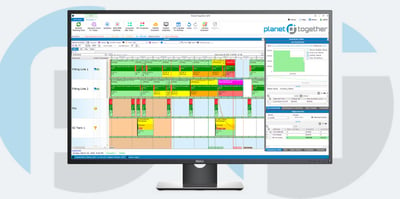
A scheduling system can only sequence what it can see. During a peak, it needs four feeds from the ERP: open and forecast orders, on-hand and in-transit inventory, bills of material and routings, and supplier lead times. It sends back the sequence and release dates. If inventory data lags, the schedule calls for ingredients that are not on the shelf.
Advanced planning and scheduling (APS) software like PlanetTogether reads those feeds and builds the sequence against finite capacity. PlanetTogether lists integrations with Kinaxis, AVEVA, Aptean Ross, John Galt, and Shiftboard. See the full set of PlanetTogether's ERP and planning integrations, or read how PlanetTogether connects to ERP, MRP, and MES systems.
So ask how often each feed refreshes. During a peak, stale data is the failure to design against.
Seasonal Demand Planning FAQs
What is seasonal demand variability in food and beverage manufacturing?
Seasonal demand variability is the predictable swing in consumer demand tied to weather, holidays, and events, such as summer beverages or holiday confectionery. For manufacturers, line load, labor needs, and storage requirements change sharply across the year, so a schedule built for average weeks fails in peak weeks.
How do food and beverage manufacturers plan for seasonal demand?
Planners start with a demand forecast, then test it against finite line, labor, storage, and ingredient capacity. They pre-build shelf-stable items in slow weeks, group changeover-heavy runs into a fixed sequence, and keep a buffer for late orders. They review the plan weekly during the peak and re-sequence when orders or supply change.
Should we build inventory ahead of a seasonal peak or produce to order?
Build ahead when the product is shelf-stable, storage space exists, and peak demand would exceed line capacity. Produce to order when shelf life is short, forecast error is high, or carrying cost outweighs the risk of a stockout. Many plants split it: pre-build the stable core range and schedule short-life items to order.
Why does a good forecast still produce a failed peak-season schedule?
A forecast sets volume, not feasibility. It can be accurate and still fail if the line cannot run that volume inside available hours after changeovers, sanitation, and labor limits. Peaks also add SKUs and shorten runs, which multiplies changeovers. Capacity, not forecast accuracy, is often what breaks the schedule first.
What data does a scheduling system need from the ERP during a seasonal peak?
At minimum: open and forecast orders, on-hand and in-transit inventory, bills of material and routings, and ingredient lead times. The ERP supplies these; the scheduling system returns the sequence and release dates. Sync frequency matters most during a peak, because stale inventory counts produce schedules the plant cannot run.
What to Check Before Your Next Peak
Before the next peak, check three things. Does peak-week demand fit in your line hours after changeovers? Which products can you build early without breaking shelf life? How fresh is your ERP inventory data when the schedule runs? If any answer is "we don't know," start there.
WHITE PAPER
Using PlanetTogether for Effective Scheduling in the Food Process Industry
A seasonal peak turns cleanouts, spoilage limits, and tight storage into schedule problems. This white paper shows how food process planners schedule around each one, from capacity and changeovers to inventory limits and shipping. Download it before your next peak.
What is inside
- How to define capacity, production rates, and yields by machine
- How to schedule cleanouts and avoid spoilage
- How to plan around limited storage and inventory constraints
- How to tie shipping schedules to production
→ Download the White Paper
Want to see a peak scheduled against your own constraints? Book a PlanetTogether demo, or explore APS software for food and beverage manufacturing.
Related reading