When Planning Moves Faster Than Execution in Supply Chain
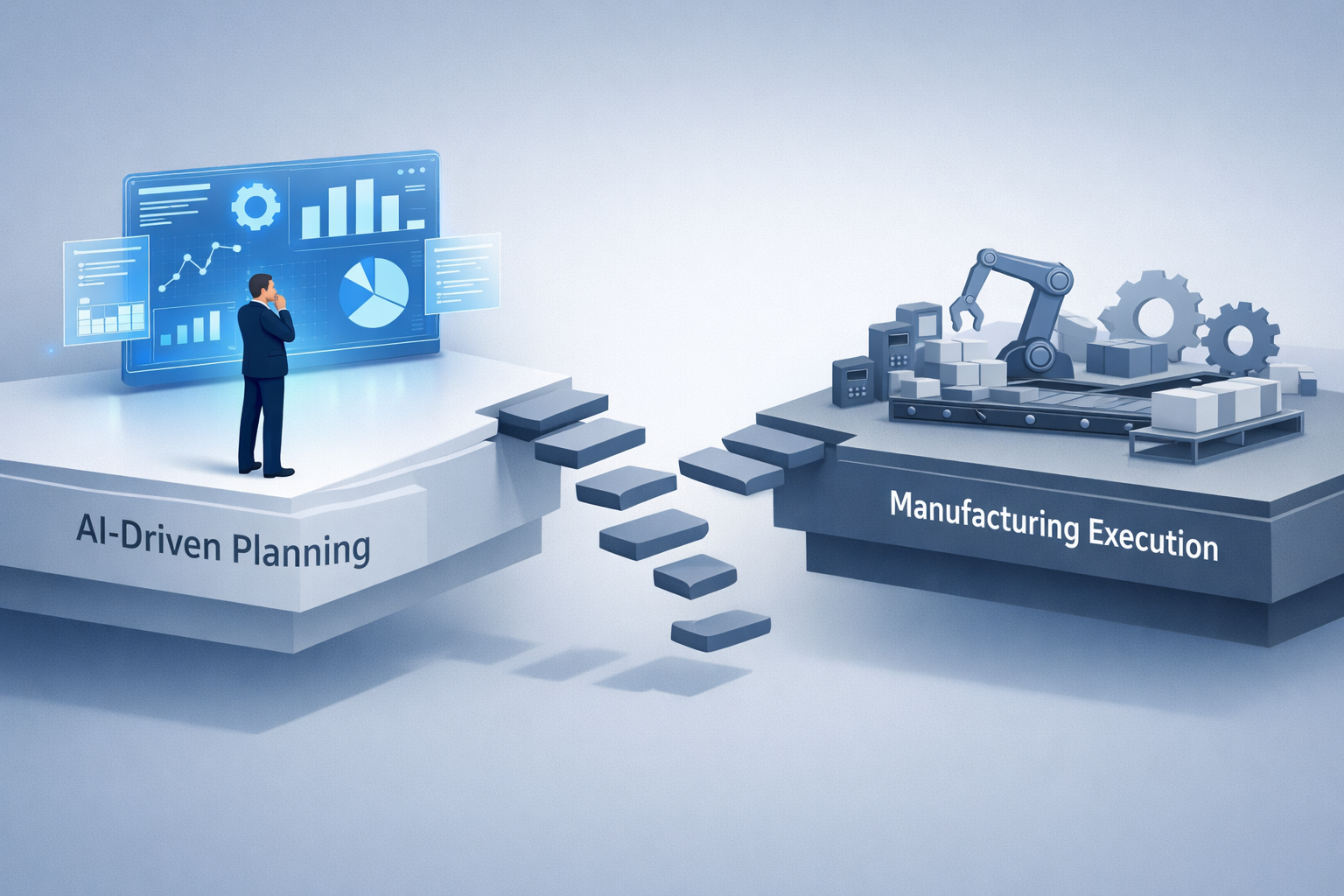
At a recent Blue Ridge event, one theme came up repeatedly in conversations with supply chain leaders. Planning is improving faster than execution.
Forecasts are becoming more accurate. AI is helping teams better understand demand. Planning systems are delivering clearer direction on what should happen next.
But inside manufacturing operations, the story is different. Schedules still shift. Constraints still appear late. Teams still make manual adjustments to keep production on track.
This disconnect is not new, but it is becoming more visible as planning continues to improve.
Smarter Planning Is Raising Expectations
Over the past few years, organizations have made real progress in how they approach demand planning. They are pulling in more data from across their networks, applying machine learning to refine forecasts, and improving how quickly they can respond to changes in demand.
These improvements matter. They reduce uncertainty and help align supply with demand more effectively.
At the same time, they raise expectations across the business. When planning becomes more precise, the assumption is that execution will follow.
That is where problems begin.

Where Plans Meet Reality
Planning systems are designed to define what should happen. Manufacturing environments are responsible for carrying it out.
The challenge is that production operates within constraints that are constantly changing. Capacity is limited. Labor availability shifts. Materials do not always arrive as expected. Sequencing decisions affect efficiency in ways that are difficult to capture in a static plan.
When these realities are not fully accounted for, even well-built plans become difficult to execute.
This is why demand planning and production scheduling cannot operate independently. They are solving different parts of the same problem.
For a deeper look at how demand planning and production scheduling must work together, see how manufacturers are approaching this in practice.
.jpeg?width=1600&height=739&name=1000005790%20(1).jpeg)
A Pattern That Keeps Repeating
One of the more consistent observations from the event was how often teams experience the same cycle. Plans are built with better data and improved forecasts. Once those plans reach the production floor, adjustments begin almost immediately.
Teams trust the plan, but they know it does not fully reflect what is happening in real time.
As planning improves, this gap does not disappear. In many cases, it becomes more noticeable. Better forecasts create tighter expectations, and tighter expectations expose execution challenges more quickly.
Why AI Has Not Solved Execution
AI is already delivering value in supply chain planning. It is helping organizations improve forecast accuracy, process demand signals, and evaluate different scenarios before decisions are made.
However, most of these capabilities operate before execution begins. They help teams decide what should happen, but they do not ensure that those decisions are feasible once production starts.
Execution requires something different. It requires systems that understand constraints as they exist in real time and can adapt accordingly.
Turning Plans Into Action
The real challenge is not access to data. Most organizations already have more data than they can fully use.
The challenge is turning that data into decisions that can be executed on the shop floor.
This means being able to translate plans into schedules that reflect actual capacity, available materials, and operational constraints. It also means being able to adjust quickly when conditions change.
Connecting demand planning with production scheduling is a critical step in making this possible. You can explore how manufacturers are approaching this in more detail here.
Where the Focus Is Shifting
The takeaway from the conversations at Blue Ridge was not that planning needs more innovation. It was that execution needs to catch up.
Organizations are starting to recognize that improving forecasts alone is not enough. What matters is whether those forecasts can be translated into production plans that actually work in practice.
This requires a closer connection between planning and scheduling, along with systems that can reflect real-world conditions as they change.
What Became Clear by the Final Day
By the final day of discussions, the message was no longer subtle.
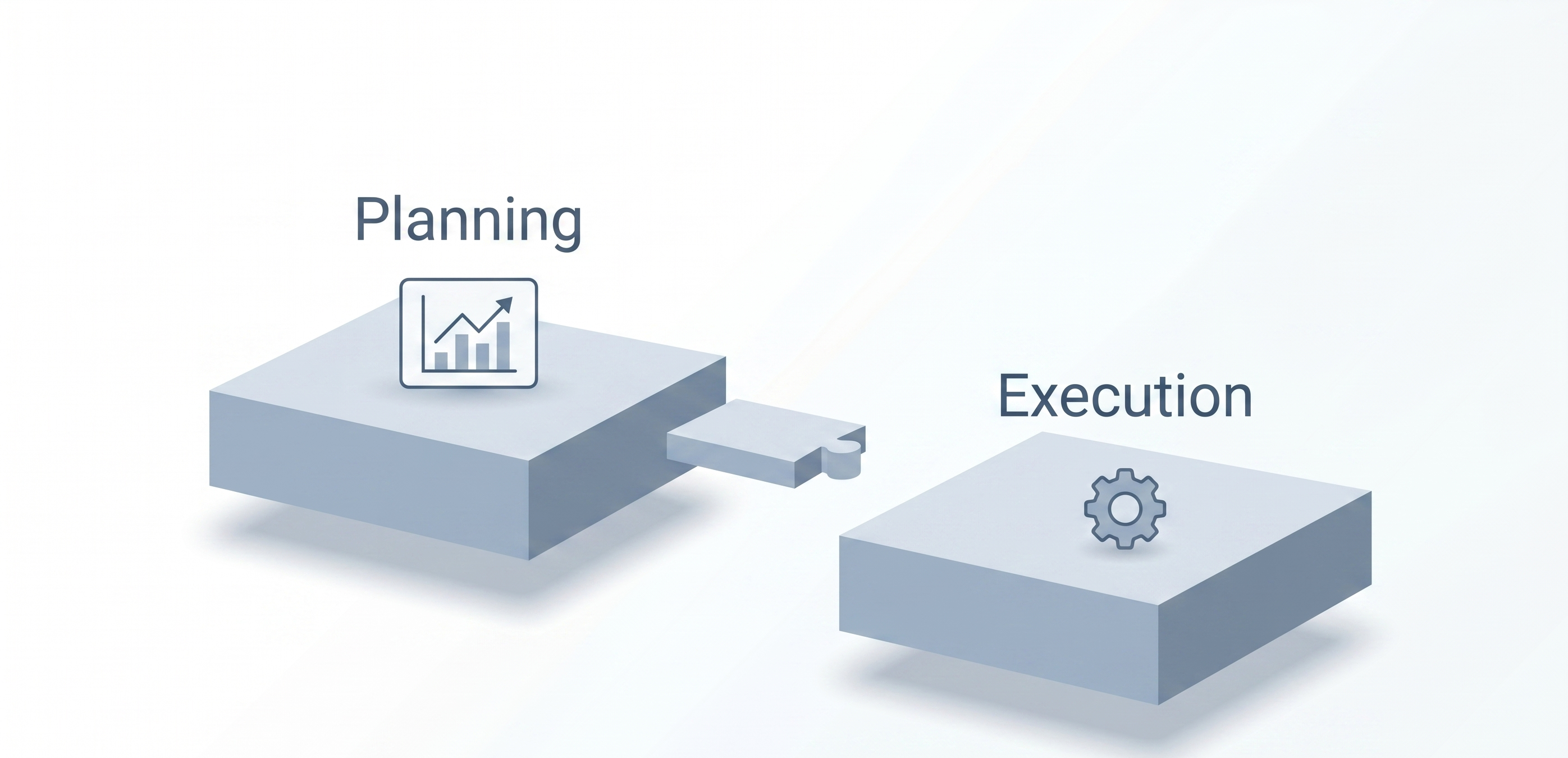
Execution has become the bottleneck.
Across sessions and conversations, there was broad agreement that most organizations are no longer limited by access to data or planning tools. Forecasting, demand planning, and analytics capabilities have improved significantly.
What has not kept pace is the ability to act on those insights.
Teams can identify risks earlier. They can see changes in demand more clearly. But turning those signals into coordinated, timely decisions on the shop floor remains a challenge.
In many cases, the issue is not technical. It is operational.
Decision-making is delayed. Plans are adjusted manually. Systems are not always aligned with how work actually gets done.
Another shift that came up repeatedly was the importance of speed.
Several speakers emphasized that a decision made in time to influence outcomes often delivers more value than a highly accurate decision made too late. This reflects the reality of supply chains that are constantly changing, where responsiveness matters as much as precision.
Planning cadence also surfaced as a constraint. Many organizations are still operating on monthly or quarterly cycles, which limits their ability to respond to real-time conditions. Even with strong forecasts, slow cycles reduce agility.
AI continues to play an important role, but its position is still evolving.
It is helping improve forecasting and provide better decision support. However, it is not yet driving execution. It still depends on underlying systems and processes to translate insight into action.
Taken together, these conversations reinforced a clear direction.
The industry is not moving away from planning innovation. It is shifting focus toward execution, speed, and the ability to operationalize decisions in real time.

Explore how connecting demand planning with production scheduling can help turn better forecasts into executable plans.
