What’s New in PlanetTogether APS V12.3.1 for Process Manufacturing
We’re excited to announce several new features included in the recent PlanetTogether APS V12.3.1 release. To showcase these capabilities, we’ll explore them through a practical scenario.
In this blog, we’ll follow a week in the life of a production scheduler using PlanetTogether. The situations described reflect many of the real scheduling challenges we hear from customers, including campaign planning, material shortages, cleaning requirements, and unexpected disruptions.
By walking through these scenarios, we’ll demonstrate how the enhancements introduced in V12.3.1 help simplify complex production planning decisions and improve visibility across the plant. Let’s start at the beginning of the week.
Monday: Campaign Planning Across Reactors and Storage Tanks
Monday morning begins with campaign planning.
The scheduler opens the production schedule for a facility running multiple reactors, intermediate storage tanks, and downstream packaging operations. Several batch campaigns are scheduled for the week, each requiring careful sequencing to minimize changeovers while keeping throughput high.
Campaign planning in process manufacturing requires more than simply assigning batches to equipment. The planner must consider tank availability, product compatibility, sanitation requirements, and how materials move through the process.
PlanetTogether models these constraints directly through Storage Areas, allowing tanks to behave like real production resources. Each storage area can be configured with capacity limits, single-item restrictions, and defined material flow connections between upstream and downstream operations.
With PlanetTogether APS V12.3.1, storage area modeling becomes even more powerful through the introduction of Storage Area Cleans.
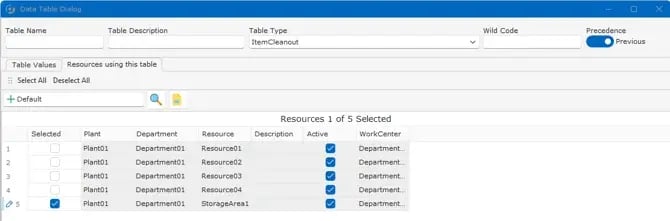 The Resources using this table tab should have the desired storage area resources selected.
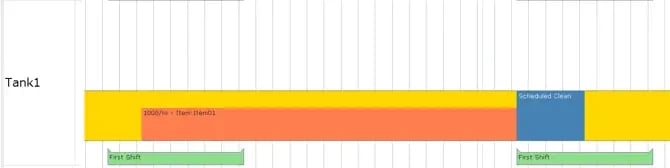
The clean can be visualized on the Gantt using a resource with no capabilities assigned to the storage area.
When a storage tank is emptied and scheduled to receive a different product, the system can automatically insert the required cleaning operation before the next batch begins. These cleaning events can be configured as fixed-duration cleans or as sequence-dependent cleans based on the products involved.
Instead of manually adding tank cleaning tasks into the schedule, planners can rely on the system to ensure sanitation requirements are automatically enforced. The scheduler finishes Monday with a balanced campaign plan that respects reactor capacity, tank constraints, and sanitation requirements.
But the week rarely goes exactly as planned...
Tuesday: A Raw Material Delay
Tuesday morning brings an update from procurement - a key ingredient shipment has been delayed by two days. Without connected scheduling tools, this type of delay would require the planner to manually check every batch that depends on the affected material. PlanetTogether immediately highlights impacted operations within the schedule.
The system scans the schedule for material requirements and identifies which batches are now at risk due to constrained inventory. Before making adjustments, the planner evaluates different options. Could another campaign move forward? Could alternate materials or inventory allocations allow the current campaign to continue? Once the supplier delay is confirmed, the schedule is refreshed.
PlanetTogether APS V12.3.1 improves how material constraints behave during this refresh process.
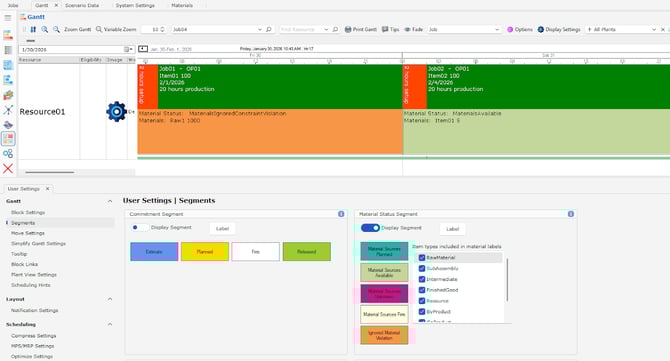
In earlier scheduling workflows, newly introduced material shortages could push affected jobs beyond the planning horizon, making it difficult for planners to immediately see where the disruption occurred.
With V12.3.1, jobs experiencing shortages remain visible in the schedule and are clearly highlighted instead of being pushed out of view. Planners can immediately identify which jobs require attention and take action, such as unscheduling the affected operations or optimizing only those jobs.
This change keeps the rest of the schedule intact while allowing planners to resolve shortages quickly and maintain production flow. With the delay accounted for, the scheduler moves a different campaign forward to keep production running. Let's take a look at a different midweek adjustment that brings another challenge.
Wednesday: Managing Cleaning During Long Production Runs
By Wednesday, the plant is running a long production campaign across several reactors. These batch operations can run for many hours or even days depending on the product and batch size. During long runs, sanitation requirements often require periodic cleaning to maintain product quality and regulatory compliance. PlanetTogether already supports attribute-based cleaning rules that automatically inserts a clean at the end of an operation when products change.
PlanetTogether APS V12.3.1 extends this capability with automatic operation splitting for cleaning events.
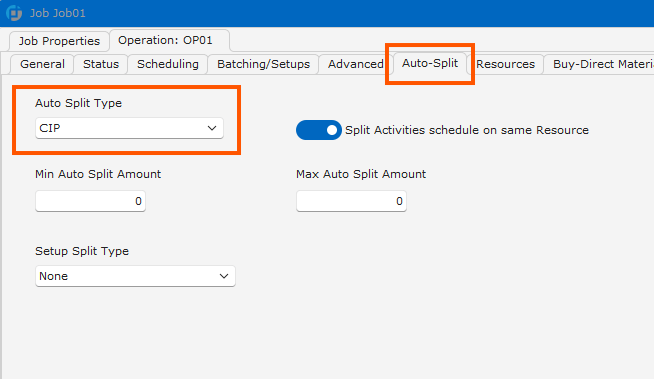
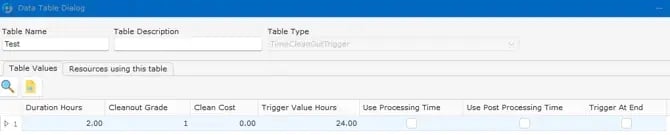
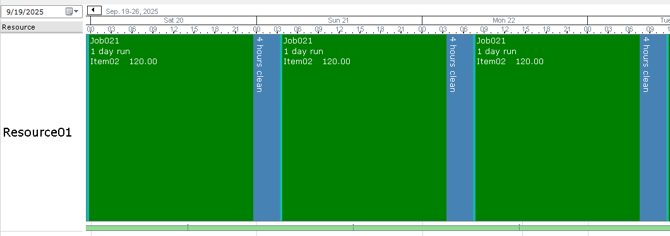
In this screenshot the job PT001 is split after 24 hours of running, a clean is added, and then the job continues.
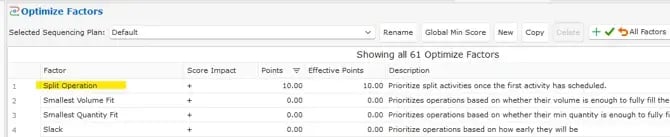
There is also a new optimize factor that prioritizes split operations being kept together.
When a production operation reaches a defined duration threshold, the system can automatically split the operation to insert the required sanitation step before continuing production. Instead of forcing planners to manually break apart long operations in the schedule, the system performs the split automatically during schedule optimization.
Production pauses for the cleaning operation and resumes afterward, ensuring sanitation rules are followed without requiring manual intervention. This automation keeps schedules cleaner, easier to manage, and more accurate to the real requirements of the production process.
Thursday: Protecting Bottleneck Resources
On Thursday, the plant’s primary reactor line is approaching full utilization, and the scheduler must ensure that upstream operations continue supplying the bottleneck resource without creating unnecessary work-in-process inventory. Balancing these priorities can be difficult. Scheduling upstream steps too early creates excess intermediate inventory, while scheduling them too late risks starving the bottleneck reactor.
PlanetTogether APS V12.3.1 introduces enhanced Buffer and Head Start scheduling capabilities to help manage this balance.
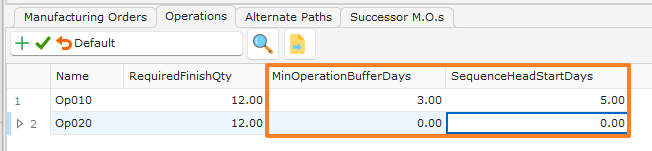
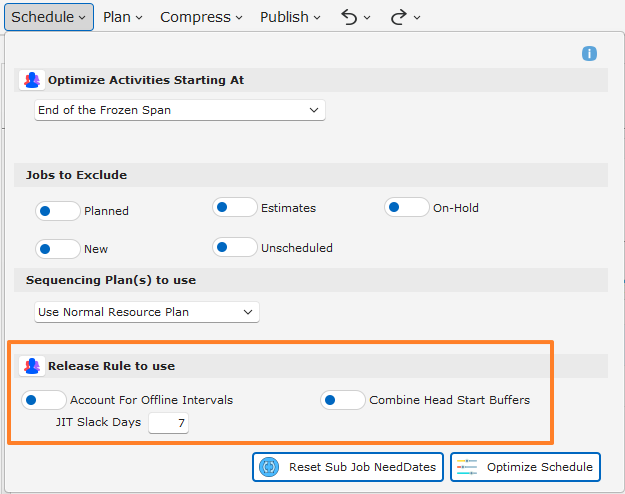
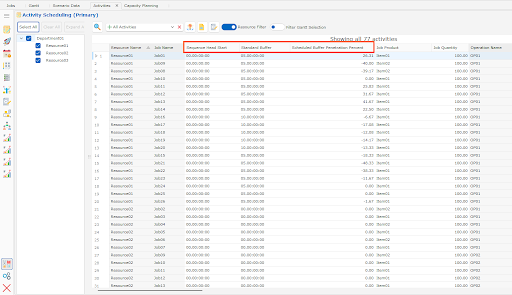
Planners can define buffer periods directly on resources or operations to ensure critical equipment always has work available without forcing upstream production to start excessively early.
New scheduling insights also allow planners to monitor buffer penetration, helping them determine whether upstream operations are supplying bottleneck resources at the correct pace. These improvements help maintain a just-in-time production flow while protecting critical equipment from downtime caused by material starvation.
Friday: Reviewing Production Lots and Inventory Risk
As the week comes to a close, the scheduler meets with operations leadership to review production performance and material usage. They want to understand how scheduling decisions made during the week affected inventory.
Which lots were consumed?
Which lots remain unused?
Are any materials approaching expiration?
To answer these questions, PlanetTogether APS V12.3.1 introduces the new Lot Production Board.
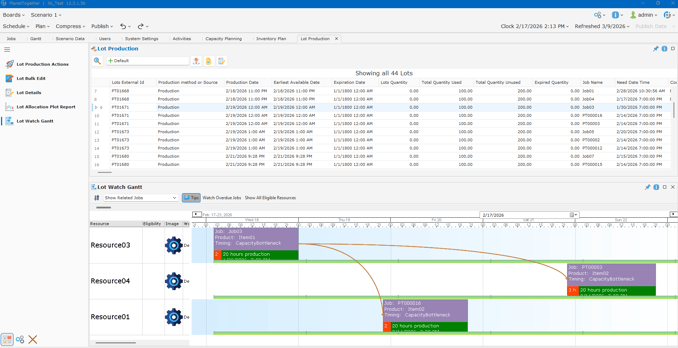
This board provides a centralized view of how lots are produced, consumed, and allocated throughout the schedule. Planners can see how much of each lot has been used, how much remains unused, and whether any quantities may expire before being scheduled.
Additional metrics highlight quantities consumed, unused inventory, and expiration risks, giving operations teams clearer visibility into how scheduling decisions affect material utilization. By improving visibility into lot consumption across the plant, the Lot Production Board helps planners reduce waste, improve traceability, and ensure materials are used efficiently.
Explore Everything Included in PlanetTogether APS V12.3.1
The scenarios in this article represent just a few examples of how PlanetTogether APS V12.3.1 helps production planners manage the realities of manufacturing operations.
From improved material constraint handling and automated cleaning operations to enhanced scheduling controls and deeper insight into production lot consumption, this release introduces several capabilities designed to make complex scheduling environments easier to manage.
These improvements build on PlanetTogether’s constraint-based scheduling framework to provide planners with better visibility, greater automation, and more flexibility when responding to everyday disruptions.
To explore the complete list of new features, improvements, and updates included in this release, we encourage you to review the full V12.3.1 release notes or speak with our team to see how these capabilities can support your scheduling environment.
Schedule a demo to see how PlanetTogether APS can simplify scheduling across your operation.