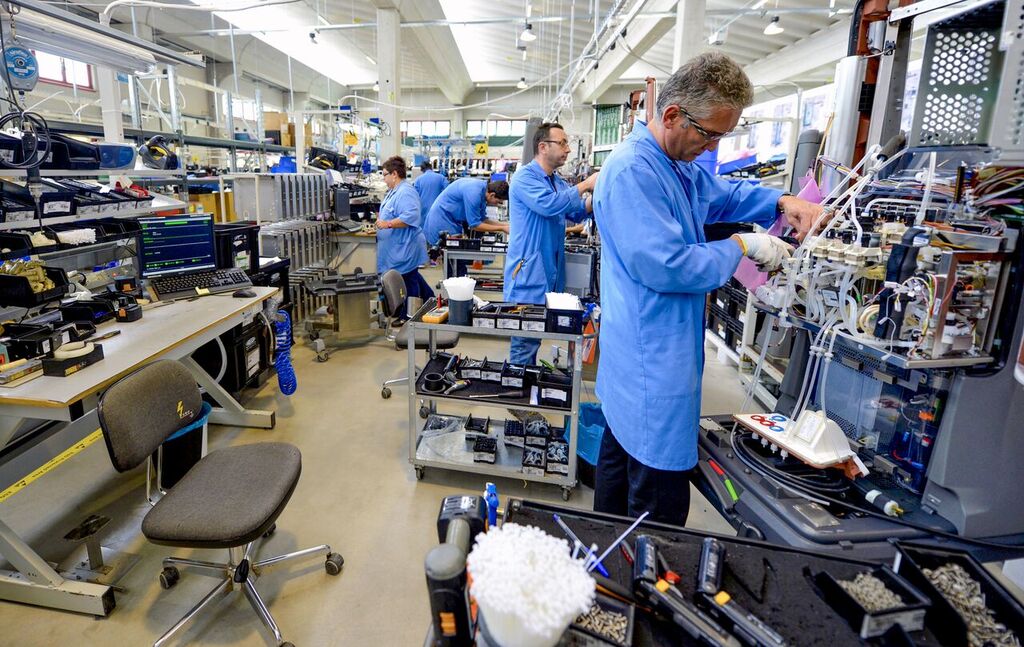
The medical equipment industry adheres to a strict regulatory environment in which all aspects of the production process must be carefully documented and approved. Because of this, there is natural apprehension toward implementing lean policies in medical manufacturing. The intense level of documentation and reporting makes lean sound like an overwhelming endeavor, especially when experimenting with cell creation, test runs, and other complex activities. With the introduction of the Affordable Care Act and other initiatives, however, medical equipment manufacturers have had to make waste reduction a top-of-mind priority.
What is Waste?
In terms of lean manufacturing, waste refers to any efforts or resources that do not add value to the end output. Waste in the supply chain can refer to an extensive amount of work-in-progress (WIP) and product inventory sitting unused in a manufacturing warehouse. Using a slightly different example, a chaotic floor layout can result in unnecessary steps to achieve a particular objective (walking, delays in finding parts) and create a disjointed process flow. With lean, it is imperative to build a consensus around what part of the value stream is deemed as value-adding or wasteful. This value stream will encompass everything from design and prototyping to part sourcing, assembly, packaging, and the distribution of the product.
How Lean Transforms Medical Equipment Manufacturing
For many medical equipment manufacturers, a major challenge presents itself in the final assembly area where there is frequent product changeover to support a diverse product mix. For example, approximately 250 different products could be assembled at a single work station. This makes it very difficult to account for pre and post processing times. As lean methodologies are implemented, manufacturers can dedicate some work stations to higher volume products, eliminating the changeover time completely. It would also greatly reduce the number of fixtures and test equipment required to support this area. This also provides benefits through reductions in calibration (fewer items to calibrate) and training (fewer employees to be trained).
Another major challenge is wasted time- since most orders involve multiple operations, both machine and labor, as well as documentation at each step. Too much time is often spent moving the product from station to station. Lean addresses this issue by setting up cells that produce the complete product up to the point it is ready to go to packaging. This process involves moving machines and people so that all operations can be completed within the cell, eliminating the transfer time and many of the associated documentation hand-offs. Additionally, the time wasted in transporting material flow can be overcome with creative modes of delivery. Stacked material carts, line-side flow racks, gravity-fed conveyors, or other inventory-replenishment tools can be helpful in lean production.
Lean manufacturing techniques require time to assimilate but, most importantly, necessitate staff involvement during the implementation process. Everyone involved in the work flow should feel empowered by knowing that this manufacturing methodology removes constraints and aims everyone's job easier and more efficiently.
Lean Manufacturing in Medical Equipment: Minimizing Waste with APS
See how Advanced Planning and Scheduling (APS) brings lean manufacturing to life in the medical equipment industry. In this video, we show how APS supports lean initiatives by reducing work-in-progress (WIP), cutting transport and motion waste, and simplifying changeovers in highly regulated environments. You’ll see how planners can use APS to create realistic, constraint-based schedules that respect documentation requirements while still improving flow on the shop floor.
Turn Lean Ideas into Profitable, Repeatable Schedules
In this article, you’ve seen how lean manufacturing can help medical equipment manufacturers reduce waste, improve flow, and simplify complex final assembly areas—even when a single station may handle hundreds of different products and heavy documentation requirements. Lean cells and better layouts cut travel and wait time, while empowering staff to remove constraints and make work easier.
But to make those improvements stick, you need planning and scheduling that supports lean every day—not just during a kaizen event.
Our eBook, “Producing for Profit,” shows what that transformation looks like inside a real manufacturing business. You’ll follow a growing manufacturer struggling with late orders, rising inventory and overtime, and constant firefighting between sales and production—until they adopt a connected planning and scheduling system that turns better decisions into better results.
In this short eBook, you’ll see how they:
- Use a single planning and scheduling system to align capacity, inventory, and customer demand
- Reduce expediting, overtime, and excess inventory while protecting on-time delivery
- Give sales and customer service realistic promise dates instead of guessing and hoping
- Free planners from spreadsheet chaos so they can focus on continuous improvement and lean initiatives
If you’re serious about turning lean manufacturing from a project into an ongoing way of working, this eBook is your next step.
