PlanetTogether Software
Lot Sizing Optimization for Packaging Efficiency
Discover lot sizing techniques for efficient packaging manufacturing. Integrating APS and ERP systems for optimal results.
The newly announced Make In India campaign eliminates many obstacles to manufacturing in India. Spotlight on GE's superplant in Pune.
As China's wages increase and PMI ratings drop rapidly, companies with international holdings are beginning to look at options outside of the former manufacturing giant. Neighboring nation, India, meanwhile, has achieved the fastest growing rates since 2005.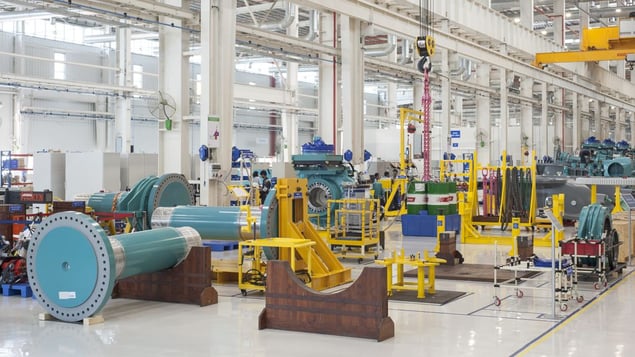 In addition, Indian Prime Minister, Narendra Modi's, February announcement of a campaign to create 100 million new jobs in the country by 2022 has led manufacturers to set their sights on manufacturing in India.
In the past, the Indian population of more than a billion people has attracted companies around the world as a location to outsource their technology and customer services, but not for manufacturing. Investors in the industry found that bureaucratic delays, old-fashioned labor rules and inadequate infrastructure were major obstacles. The new “Make in India” campaign promises labor reforms, investment incentives, a skilled and educated workforce, and infrastructure updates. The effort includes a goal of increasing the manufacturing percentage of India’s GDP from 17% to 25%.
India's interest in bringing more manufacturing into the country crosses many industrial sectors, including: autos and auto components, aviation, biotechnology, chemicals, construction, machinery for defense, food processing and the oil and gas industry.
Anticipating the strengthening of India's manufacturing market, GE opened Phase I of a flexible multi-modal factory at Chakan in Pune (South India) in February. The plant covers 67 acres and will produce different products for multiple verticals utilizing shared infrastructure/equipment/people all in the same building. 1,500 workers will operate in an area the size of 38 football fields.
GE's investment is $200 million and the aim is twofold for the new facility: first, to harmonize its various operations, and second, to gain economies of scale and a better use of its capital. The CEO of the facility looks forward to being able to quickly adjust production with demand while using the same people and factory floor. Half of the output will remain in India and half will be exported.
The Pune factory is state-of-the art with digitally interlinked equipment, supply chains, distribution networks, and servicing groups. It has been described as an “intelligent ecosystem, or superplant.” The real-time connected system should allow GE to optimize production and communications for decision-making. The factory includes advanced 3D printing and laser inspection technologies. Products to be fabricated range from aircraft engine parts to locomotive components, wind turbines and water treatment units.
A superplant like GE's brings users and manufacturing locations together to visualize solutions to manage capacity and material bottlenecks, to synchronize the workflow, protect against uncertainty and variability, and to optimize alternatives for on-time deliveries with high profit margins.
In this video, you’ll see how PlanetTogether Advanced Planning and Scheduling (APS) supports multi-plant scheduling for globally distributed operations and “superplants” like GE’s flexible multi-modal factory in Pune, India. Learn how APS helps manufacturers manage capacity and material bottlenecks, synchronize workflows, and keep on-time deliveries and margins high across multiple sites.
Building or shifting to a “superplant” in India—or any emerging manufacturing hub—promises lower costs, flexible capacity, and access to new markets. But those benefits only materialize if your planning and scheduling can keep pace with the complexity of a global, multi-plant network. The real question is not just where you produce, but how you orchestrate production, materials, and capacity across all your sites.
Download our one-page “The Money Is in the Planning” infographic to see how better planning and scheduling can help you:
Use it with your executive, operations, and supply chain teams as a fast way to connect global manufacturing strategy to the planning and scheduling mechanics that really drive cost, risk, and service performance.
Discover lot sizing techniques for efficient packaging manufacturing. Integrating APS and ERP systems for optimal results.
Explore the latest trends in the printing and packaging industry for 2025, from sustainable materials to smart packaging innovations.
Shift from forecast-driven to demand-driven scheduling in packaging manufacturing. Learn how finite scheduling cuts costs and improves efficiency.