Learn how planners assess schedule risks from demand shifts, material delays, machine downtime, labor limits, and supplier issues.
By PlanetTogether
Published: Sep 25, 2023
| Last Verified: Apr 30, 2026
Quick Answer: Risk Assessment in Manufacturing Scheduling
Risk assessment in manufacturing scheduling helps planners identify what could disrupt the production plan before work reaches the floor. Common risks include demand changes, material shortages, machine downtime, labor gaps, supplier delays, quality issues, and compliance requirements. By ranking each risk by likelihood and impact, planners can protect due dates, reduce expedites, and build more realistic schedules.
Production planners deal with change every day. Orders move, materials arrive late, machines go down, and customer priorities shift. Therefore, risk assessment should be part of the scheduling process, not a separate review after the schedule fails.
What Is Production Planning?
Production planning turns demand into a plan for materials, machines, labor, and production time. It shows what the plant needs to make, when work should run, and which resources must be available.
However, the plan only works when it reflects real constraints. Planners need to understand material readiness, labor availability, machine capacity, supplier lead times, and customer due dates before they commit the schedule.
Why Production Planners Need Risk Assessment
Production planners build schedules that balance customer demand, resource capacity, cost, lead time, and product quality. However, even a strong schedule can fail when a key assumption changes.
One of the key challenges production planners face is knowing which risks could disrupt the schedule first. A planner may need to protect a bottleneck machine, resequence orders, adjust material priorities, or test a different production scenario before the issue reaches the floor.
Common Risks in Manufacturing Scheduling
Scheduling risk usually starts with a constraint that planners cannot see soon enough. Therefore, risk assessment should focus on the events that can change capacity, materials, labor, quality, or delivery timing.
Demand Variability
Demand variability creates risk when customer orders change faster than the schedule can adjust. For example, a rush order may require capacity that already supports another job.
To reduce this risk, planners should review demand changes against available machines, labor, materials, and due dates before they release the updated schedule.
Resource Constraints
Resource constraints occur when the plant does not have enough machine time, labor, tooling, or material to support planned work. These constraints often create queues, overtime, and missed handoffs.
Therefore, planners should identify bottleneck resources early and schedule around them. Finite capacity planning can help teams avoid schedules that look possible but cannot run on the floor.
Supplier Delays
Supplier delays create schedule risk when purchased parts or raw materials arrive later than planned. One late component can stop a job, change the sequence, and delay other orders behind it.
As a result, planners should connect supplier status to the production schedule. When material risk is visible, teams can resequence work or update priorities before production stalls.
Machine Breakdowns
Machine breakdowns reduce available capacity and can disrupt the schedule, especially when the affected machine is a bottleneck. A short outage can still create late orders if planners have no alternate route.
Then, planners can reduce this risk by tracking downtime patterns, maintenance windows, and qualified backup resources. They can also test recovery options before the schedule is released.
Quality Issues
Quality issues create risk when defects lead to rework, scrap, inspection delays, or order holds. These problems consume capacity that the schedule may have assigned to other work.
To manage this risk, planners should account for rework paths, inspection steps, and quality-related delays when they plan critical orders.
Market Volatility
Market volatility can change demand, product mix, and customer priorities. When those changes reach the plant, the schedule may need to shift quickly.
Because of this, planners need fast scenario planning. They should be able to compare what happens if demand increases, a priority order moves forward, or capacity becomes limited.
Regulatory Compliance
Regulatory compliance creates scheduling risk when production must follow specific rules, documents, inspections, or approval steps. These requirements may affect timing, routing, labor skills, or material use.
Therefore, planners should treat compliance steps as real scheduling constraints. If the schedule ignores them, execution teams may face delays after work has already started.
How to Assess Schedule Risk
Risk assessment in manufacturing scheduling helps planners find risks, estimate their impact, and choose the best response. The goal is not to remove every risk. The goal is to see schedule risk early enough to make better decisions.
A practical risk review should focus on the resources and events that can change the schedule fastest. These usually include demand, materials, machines, labor, suppliers, quality, and compliance requirements.
Identify Risks
Start by listing the events that could disrupt the schedule. These may include material shortages, machine downtime, labor gaps, late suppliers, demand changes, changeover delays, or quality holds.
Then, connect each risk to the orders, resources, and due dates it could affect.
Quantify Impact
Next, estimate what each risk would do to the schedule. Look at possible effects on due dates, overtime, cost, throughput, WIP, and customer service.
For example, a material shortage on a low-priority item may be manageable. A shortage on a bottleneck order may require immediate action.
Probability Analysis
After that, estimate how likely each risk is to happen. Historical downtime, supplier performance, forecast accuracy, and past schedule changes can help planners make a better judgment.
When data is limited, planners can still use simple categories such as low, medium, and high probability.
Risk Prioritization
Risk prioritization helps planners decide what to fix first. A risk with high impact and high probability should move to the top of the list.
However, planners should also consider urgency. A moderate risk that could affect today’s schedule may matter more than a larger risk that is weeks away.
Mitigation Strategies
Mitigation strategies reduce the chance that a risk will break the schedule. These may include safety stock, supplier follow-up, alternate routings, predictive maintenance, labor cross-training, or changeover planning.
In addition, planners should prepare recovery options. That may include resequencing work, moving orders to another line, or protecting capacity on a bottleneck resource.
Integration of APS Software
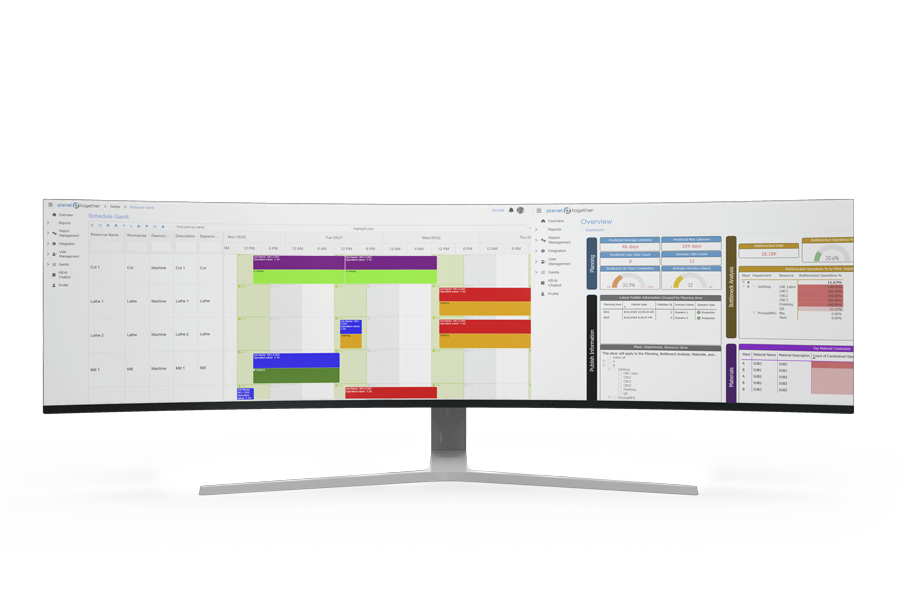
Advanced planning and scheduling (APS) software like PlanetTogether can support risk assessment by modeling constraints in the schedule. APS can account for capacity, materials, labor, equipment, order priorities, and changeovers.
As a result, planners can compare scenarios before making a schedule change. They can also see where one risk may create delays across other resources.
Decision Framework: Which Scheduling Risk Should You Fix First?
Start with the risk that can break the schedule fastest. If demand changes drive disruption, improve forecast review and what-if planning. If shortages stop work, focus on material visibility. If downtime limits output, protect bottleneck machines. If labor or changeovers create delays, tighten capacity rules. When several risks interact, APS can help planners compare trade-offs before they release the schedule.
How APS Software Supports Scheduling Risk Assessment
APS software helps planners turn risk signals into schedule decisions. It can show where demand, material, machine, labor, and priority changes affect the production plan.
Because APS works with constraints, planners can compare options before they commit the schedule. For example, they can test whether to resequence work, move an order, add overtime, or protect capacity on a bottleneck resource.
How ERP, SCM, and MES Integration Improves Risk Visibility
The integration of APS software with enterprise resource planning (ERP), supply chain management (SCM), and manufacturing execution systems (MES) gives planners better risk visibility. These systems hold data about orders, inventory, materials, suppliers, machines, and production status.
When APS uses that data, planners can build schedules from current conditions instead of outdated assumptions.
Real-Time Data Sharing
Real-time data sharing helps planners see changes sooner. For example, a planner may see a new order, a material delay, a machine issue, or a capacity problem before the schedule is released.
Therefore, teams can respond before the risk becomes a late order.
Improved Forecast Accuracy
Forecasts are never perfect, but better demand data can reduce schedule risk. ERP and SCM data can help planners compare current demand with historical patterns and known customer changes.
Then, APS can test whether available capacity can support the updated demand plan.
Resource Optimization
Resource optimization helps planners use machines, labor, and materials more effectively. It also helps them protect bottleneck resources that limit throughput.
When capacity is tight, planners can compare options such as resequencing work, adding overtime, using an alternate resource, or changing order priorities.
Alerts and Notifications
Alerts and notifications help planners respond when a schedule risk appears. These risks may include material shortages, machine downtime, late orders, or capacity overloads.
However, alerts only help when they connect to action. Planners need enough context to decide whether to resequence work, update priorities, or communicate a delivery risk.
Scenario Analysis
Scenario analysis lets planners compare possible schedule changes before they commit. For example, a planner can test what happens if a supplier is late, a machine goes down, or a rush order moves ahead.
Because each scenario shows a different trade-off, planners can choose the option that protects due dates and plant performance.
Continuous Improvement
Continuous improvement turns schedule risk data into better planning rules. After production runs, planners can review which risks appeared, how the team responded, and which delays could have been prevented.
Then, managers can update routings, maintenance plans, supplier rules, safety stock, or scheduling policies.
Proactive Risk Assessment for Smarter Production Planning
Production planners need a practical way to see risk before it reaches the shop floor. Risk assessment gives them that view by connecting demand, capacity, materials, equipment, and supplier status to the schedule.
By using current data, what-if planning, and constraint-based scheduling, planners can reduce surprises and make better decisions. Over time, this helps improve schedule adherence, reduce firefighting, and protect customer commitments.
Reduce Schedule Risk with Better Planning Visibility
Demand shifts, supplier delays, machine downtime, and labor gaps can turn a good schedule into a costly scramble. Therefore, planners need more than order data. They need capacity visibility, constraint logic, and fast scenario testing.
The white paper WHY ERP ALONE IS Not the Answer explains where ERP stops and APS starts. It also shows how better planning visibility helps teams identify risk before it disrupts delivery dates.
In this white paper, you will learn how to:
First, spot capacity and material risks before they disrupt delivery dates
Next, compare scheduling alternatives when demand, labor, or equipment changes
Then, connect ERP data to constraint-based planning and better resource optimization
Also, reduce expediting, changeovers, and late-order surprises with clearer bottleneck visibility
Finally, give planners a stronger basis for risk mitigation and customer commitments
FAQs: Risk Assessment in Manufacturing Scheduling
What is risk assessment in manufacturing scheduling?
Risk assessment in manufacturing scheduling is the process of finding events that could disrupt the production schedule, estimating their likelihood and impact, and planning how to reduce or respond to them.
What are the most common scheduling risks in manufacturing?
Common scheduling risks include demand changes, material shortages, supplier delays, machine breakdowns, labor constraints, quality issues, changeovers, and compliance requirements.
How do production planners rank scheduling risks?
Production planners usually rank risks by likelihood, impact, and urgency. A high-impact risk with a high chance of happening should receive attention before a low-impact risk that rarely occurs.
How does APS help with schedule risk assessment?
APS helps planners model constraints, compare what-if scenarios, monitor capacity, and adjust schedules when risks appear. It can also improve visibility across machines, labor, materials, and order priorities.
When should a manufacturer move beyond spreadsheets for risk assessment?
A manufacturer should move beyond spreadsheets when schedule changes happen often, constraints interact across resources, or planners need faster scenario planning than manual tools can support.
Ready to Transform Your Manufacturing Efficiency?
Discover how PlanetTogether APS can help planners model constraints, compare scenarios, and respond faster when production conditions change. Request a demo today to see advanced planning and scheduling in action.